


Career transitions are messy. Whether you're pivoting industries, climbing the corporate ladder, or starting fresh after a layoff, the journey feels overwhelming. You know you need guidance, but should you turn to the latest AI coaching tools or invest in a human coach?
The short answer: it depends on your situation, budget, and what kind of support you actually need. But here's the thing – this isn't really an either-or decision anymore. The smartest career movers are using both, strategically.
Let me break down what each approach brings to the table, so you can make the right choice for your transition.
The AI Coaching Revolution: What's All the Hype About?
AI coaching has exploded in the last couple of years, and for good reason. These tools are getting scary good at providing personalized guidance, and they're available whenever you need them.
The AI Advantage
24/7 Availability That Actually Matters
When you're in transition mode, opportunities don't wait for business hours. That dream job posting drops at 11 PM on Sunday? AI coaching tools are ready to help you craft the perfect cover letter right then and there. No scheduling, no waiting – just immediate support when inspiration strikes.
Budget-Friendly Reality Check
Let's talk money. Quality human coaches can run $150-300+ per session. AI coaching? Many platforms are free or cost less than $30/month. When you're between jobs or considering a pay cut for a career change, this price difference isn't just convenient – it's often the difference between getting help and going it alone.
Objective, Data-Driven Feedback
AI doesn't have bad days or personal biases. It won't sugarcoat your resume flaws or tell you what it thinks you want to hear. If your LinkedIn profile needs work, AI will tell you straight up, with specific suggestions backed by current market data.

Where AI Coaching Shines in Career Transitions
Interview Preparation That Never Gets Tired
Want to practice answering "Tell me about a time you faced a challenge" for the 20th time today? AI is here for it. No judgment, no scheduling conflicts, and it can throw different variations at you until you nail your responses.
Resume Optimization Based on Real Job Postings
AI tools can analyze thousands of job postings in your field and suggest exactly which keywords and skills to emphasize. They're constantly updated with current hiring trends, something even experienced human coaches might miss.
Career Path Mapping with Market Data
Wondering if your transition from marketing to product management makes sense? AI can show you real career progression data, salary ranges, and required skills for your target role.
Human Coaching: The Irreplaceable Human Touch
But here's where things get interesting. Despite all the AI advances, human coaches bring something to career transitions that algorithms simply can't match.
What Humans Do Best
Reading Between the Lines
A good human coach doesn't just listen to what you're saying – they hear what you're not saying. When you mention feeling "fine" about leaving your current job, they pick up on the hesitation in your voice that suggests you're actually terrified.
Contextual Understanding of Your Whole Life
AI knows you want to transition to tech, but a human coach understands that you also have aging parents, a spouse who travels for work, and a kid starting college next year. They help you navigate career decisions within the reality of your actual life, not just your professional ambitions.
Network Access and Industry Insights
That executive coach who worked in your target industry for 15 years? They know which companies actually promote from within, which startups are about to get major funding, and which "amazing opportunities" are actually red flags in disguise.

The Emotional Intelligence Factor
Career transitions are emotional rollercoasters. One day you're excited about new possibilities, the next you're questioning everything. AI can provide encouragement through pre-programmed responses, but human coaches provide real emotional support.
They help you work through imposter syndrome, manage family pressures about your career choices, and stay motivated when the job search stretches longer than expected. This emotional support often makes the difference between pushing through tough times and giving up on your transition altogether.
The Head-to-Head Comparison
Let's get practical about when each approach works best:
Speed vs. Depth
AI Coaching: Lightning-fast responses to specific questions. Need to know how to format your resume for ATS systems? You'll have an answer in seconds.
Human Coaching: Slower, but goes deeper. Takes time to understand your unique situation and provides nuanced advice that considers multiple factors.
Cost vs. Value
AI Coaching: Low financial investment, high time investment (you do most of the work yourself).
Human Coaching: High financial investment, but potentially faster results because you're leveraging someone else's experience and network.
Scalability vs. Personalization
AI Coaching: Can help with repetitive tasks like interview prep, cover letter variations, and skills assessments without limits.
Human Coaching: Limited by time and availability, but provides deeply personalized strategies tailored to your specific goals and challenges.
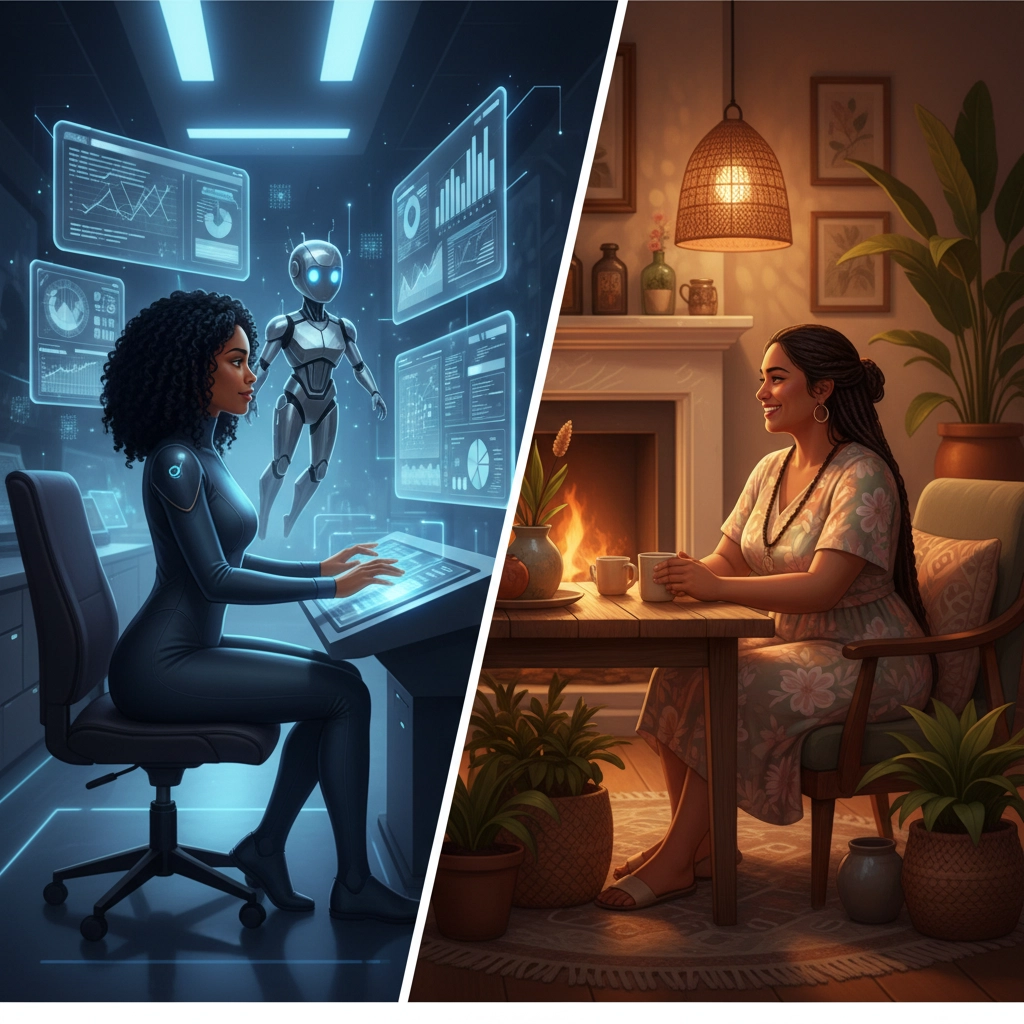
When to Choose AI Coaching
AI coaching makes the most sense when you:
- Have a clear direction but need help with execution (resume writing, interview prep, LinkedIn optimization)
- Are early in your career and need foundational guidance about job search strategies
- Have budget constraints but still want professional development support
- Need frequent practice opportunities for presentations, interviews, or networking conversations
- Want to explore multiple career paths quickly before committing to one direction
When Human Coaching Is Worth the Investment
Human coaching becomes essential when you:
- Are making a major career pivot that involves significant risk or uncertainty
- Need industry-specific insights from someone who's been in your target field
- Are dealing with complex personal circumstances that affect your career decisions
- Want access to professional networks and potential job opportunities
- Need accountability and motivation to follow through on your transition plan
- Are at a senior level where career moves have high stakes and long-term implications
The Hybrid Approach: Best of Both Worlds
Here's the strategy that smart career transitioners are using: combine both approaches strategically.
Use AI coaching for:
- Daily skill-building and practice
- Resume and LinkedIn profile optimization
- Market research and salary benchmarking
- Interview question practice and feedback
- Tracking job applications and follow-ups
Use human coaching for:
- Developing your overall transition strategy
- Processing emotions and managing stress
- Making major decisions about direction and timing
- Accessing networks and hidden job markets
- Negotiating offers and career moves
A Practical Example:
Sarah wanted to transition from accounting to UX design. She used AI coaching daily to practice design thinking exercises and build her portfolio. Monthly sessions with a human coach helped her navigate the emotional challenges of starting over, make connections in the design community, and eventually land her first UX role.
Cost: About $200/month total versus $800+ for human coaching alone.
Result: Successful transition in 8 months with both practical skills and emotional support.
Making Your Choice
The "which is better" question misses the point. The real question is: what combination of support do you need to make your career transition successful?
If you're tight on budget, start with AI coaching to build foundational skills, then invest in a few strategic human coaching sessions for major decisions. If budget isn't a constraint, use AI for frequent practice and skill-building while working with a human coach for strategy and emotional support.
Your career transition doesn't have to be a lonely journey. Whether you choose AI, human coaching, or both, the key is getting started with some form of professional guidance. Your future self will thank you for making the investment.
The coaching landscape has evolved. Take advantage of both technological innovation and human wisdom to navigate your transition with confidence.

