

Ever wondered how Walt Disney turned wild creative ideas into magical realities? The secret wasn't just imagination, it was a systematic approach that balanced creativity with practicality. The Dreamer, Realist, Critic (DRC) tool is Disney's legendary framework for transforming big dreams into actionable plans that actually work.
This isn't just another brainstorming technique. It's a complete system that takes your ideas through three essential filters, ensuring they're not only innovative but also feasible and refined. Whether you're coaching clients through major life transitions or helping teams solve complex problems, this tool bridges the gap between "what if" and "what is."
Understanding the Three Roles
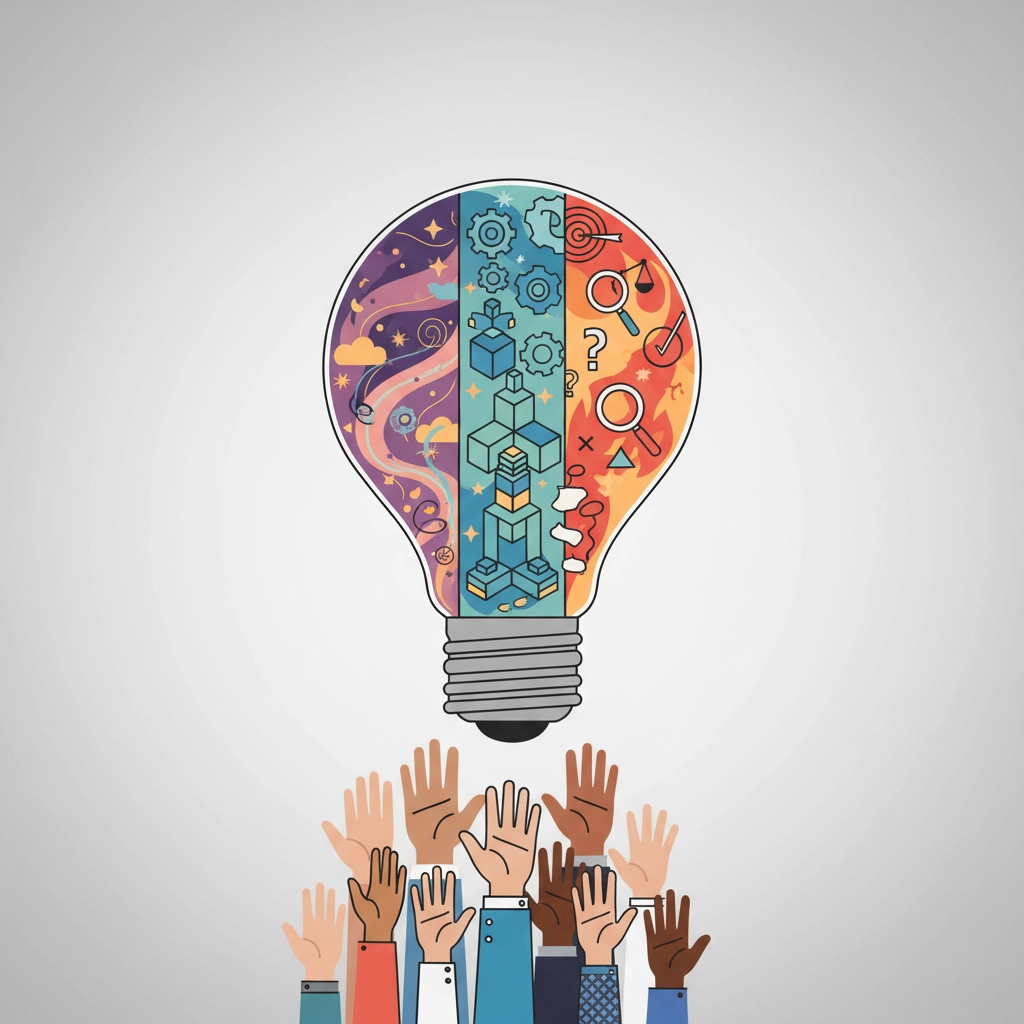
The magic of the DRC tool lies in its three distinct perspectives, each serving a crucial purpose in the creative process.
The Dreamer: Where Possibilities Live
The Dreamer is pure creative energy. This role embodies unlimited thinking, free from constraints, budgets, or practical limitations. When you're in Dreamer mode, everything is possible. You're exploring wishes, painting visions, and asking "what if" without immediately jumping to "but how."
Dreamers generate ideas freely, focusing on quantity over quality. They imagine scenarios as if resources were unlimited and obstacles didn't exist. This isn't naive thinking, it's strategic creativity that opens up possibilities you might never consider if you started with limitations.
Think of it this way: if you were designing the perfect solution without any constraints, what would it look like? That's your Dreamer talking.

The Realist: Making Dreams Tangible
After the Dreamer has painted the vision, the Realist steps in with a practical mindset. This role takes those big ideas and asks the crucial question: "How can we actually make this happen?"
Realists are result-oriented and action-focused. They select the most promising ideas from the Dreamer's output and develop concrete implementation plans. They consider timelines, resources, responsibilities, and logistics. They're not trying to crush dreams, they're figuring out how to build them.
The Realist asks practical questions: When will this happen? Who's responsible for what? What resources do we need? What's our timeline? How do we measure success? These aren't dream-killers; they're dream-builders.
The Critic: The Quality Guardian
Here's where many people get uncomfortable, but the Critic isn't the villain in this story. The Critic's job isn't to tear down ideas, it's to strengthen them through constructive analysis.
Critics examine plans from an end-user perspective. They identify potential risks, spot gaps in logic, and suggest improvements. They ask tough questions like: What could go wrong? How will people actually use this? What obstacles haven't we considered? Where are the weak points?
The Critic serves as a quality guardian, ensuring that plans are robust enough to survive real-world implementation. Without this perspective, even the most creative and practical ideas can fail when they meet unexpected challenges.
How to Apply the DRC Method
The power of this tool lies in its sequential application. You don't jump between roles randomly, you move through them systematically.
Phase 1: Pure Dreaming
Start in full Dreamer mode. Set aside practical concerns and let creativity flow. Generate as many ideas as possible around your challenge or opportunity. Focus on visual, creative thinking. Ask questions like:
- What would the ideal solution look like?
- If resources were unlimited, what would we create?
- What's the most exciting possibility here?
- What would wow people completely?
Don't evaluate or filter during this phase. Quantity matters more than quality. Write everything down, no matter how wild it seems.
Phase 2: Reality Check
Now shift to Realist mode. Review all the ideas from Phase 1 and start developing implementation strategies. Select the most promising concepts and ask:
- How could this actually work?
- What steps would we need to take?
- What resources are required?
- Who would be involved?
- What's a realistic timeline?
- How do we measure progress?
Transform abstract ideas into concrete action plans. The Realist doesn't eliminate ideas: it finds ways to make them work.
Phase 3: Constructive Criticism
Finally, engage your inner Critic. Review the plans developed in Phase 2 and examine them critically:
- What could go wrong with this approach?
- How will the end user actually experience this?
- What obstacles haven't we considered?
- Where are the weak points in our plan?
- What improvements are needed?
- How can we make this even better?
If the Critic identifies serious flaws, cycle back to the Realist to revise the plan, or even return to the Dreamer to explore new approaches.
Why All Three Perspectives Matter
Each role is absolutely essential. Remove any one of them, and the process breaks down:
Dreamers without Realists create beautiful visions that never get implemented. They generate excitement but no results.
Realists without Dreamers produce efficient execution of mediocre ideas. They get things done but miss breakthrough opportunities.
Critics without Dreamers become negativity machines that shut down innovation before it can flourish.
Dreamers and Realists without Critics rush forward with plans that haven't been properly stress-tested, often leading to expensive failures.
The magic happens when all three perspectives work together in sequence, each building on the others' contributions.
Practical Implementation Tips
Solo Application
When working alone, give each role dedicated time and mental space. Some people find it helpful to literally change positions: sit in different chairs for each role, or even use different rooms. This physical shift can help trigger the mental shift between perspectives.
Set specific time limits for each phase. Spend 15-20 minutes in pure Dreamer mode, then 20-30 minutes as the Realist, followed by 10-15 minutes of critical analysis.
Team Application
In group settings, you can assign different people to embody each role, or have the entire team move through the phases together. Some facilitators create separate spaces for each role, allowing team members to physically move between "rooms" as they shift perspectives.
Consider rotating roles among team members across multiple sessions. This helps everyone develop all three thinking styles and prevents people from getting stuck in their preferred mode.

When to Use the DRC Tool
This framework is particularly powerful for:
Strategic Planning: When you need to balance innovation with practical implementation
Problem Solving: For complex challenges that require both creative and analytical thinking
Goal Setting: When helping clients envision and plan significant life or career changes
Project Development: For any initiative that needs to be both inspiring and achievable
Team Building: To help groups leverage diverse thinking styles productively
The DRC tool works especially well when stakes are high and you can't afford to choose between creativity and practicality. It ensures you get both.
Making It Stick
The real value of the Dreamer, Realist, Critic tool lies not just in using it once, but in developing these three thinking modes as habitual perspectives you can access when needed.
Start small. Try it on everyday decisions first. Practice shifting between these roles consciously until it becomes natural. Over time, you'll find yourself automatically considering the dreamer's vision, the realist's plan, and the critic's concerns in your daily thinking.
Remember, the goal isn't to eliminate any of these voices: it's to use them strategically. Let the Dreamer dream, the Realist plan, and the Critic refine. When all three work together, you get ideas that are not only innovative but also achievable and resilient.
Walt Disney proved that dreams and reality don't have to be opposites. With the right framework, they can be powerful partners in creating something truly extraordinary.

