


Whether you're leading a coaching session, training workshop, or team development meeting, the way you sequence your content can make or break the entire experience. Good sequencing isn't just about having a plan, it's about creating a journey that takes people from where they are to where they need to be, smoothly and effectively.
Think about it: you've probably sat through sessions that felt scattered, where you jumped from topic to topic without any clear connection. Or maybe you've been in sessions that started too intense and left everyone mentally exhausted before the real work began. That's what happens when sequencing gets ignored.
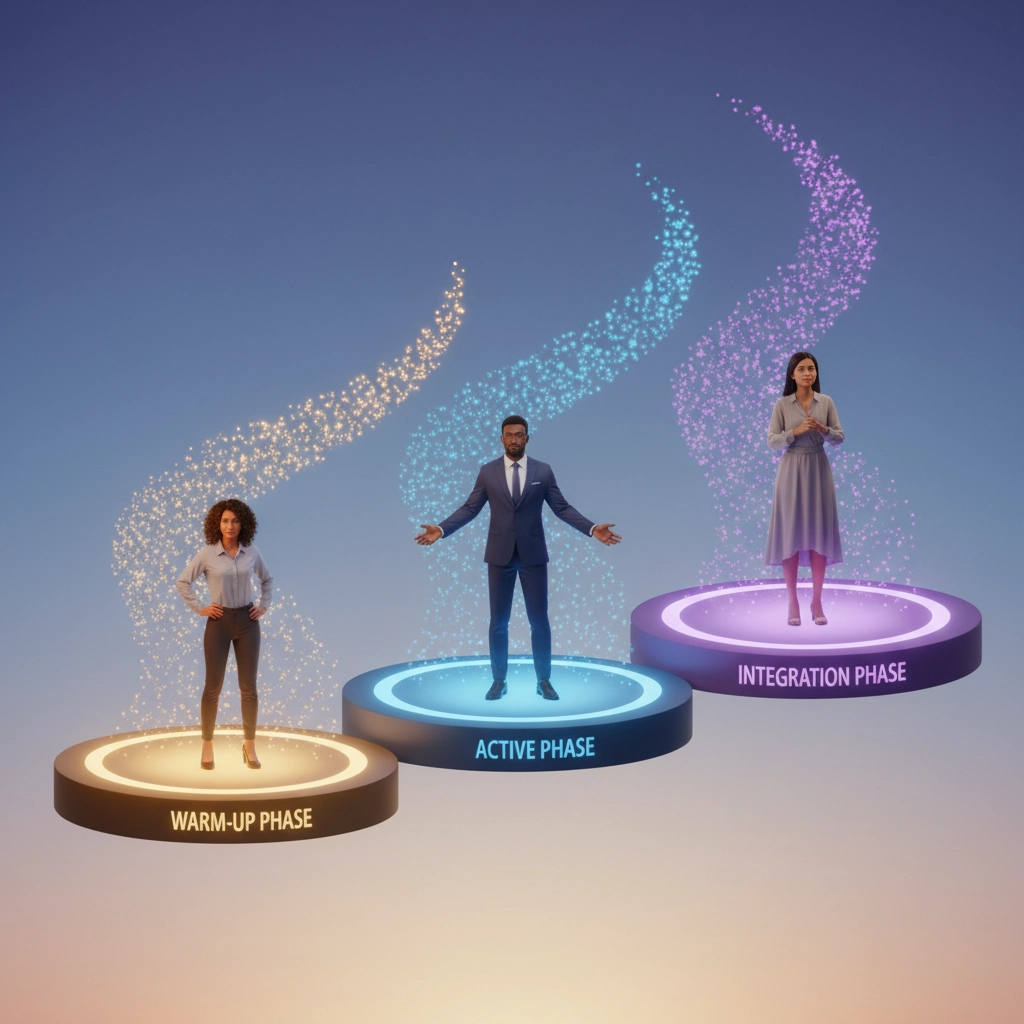
The Three-Phase Framework
Every effective session follows a simple three-part structure that works whether you're coaching executives, training new employees, or facilitating a team retreat.
Phase 1: The Opening (Warm-Up)
This isn't just about saying hello and going through logistics. Your opening phase serves a crucial psychological function: it transitions people from whatever they were doing before into focused engagement with your session.
Start with something that gets people present and connected to the work ahead. This might be a quick check-in, a simple icebreaker, or a brief discussion about what success looks like today. The key is choosing activities that gently pull people's attention into the room and prepare their minds for learning.
Phase 2: The Core Work (Active Phase)
This is where the real magic happens. Everything in this middle section should build toward your main objective for the session. If you're working on leadership skills, don't just randomly throw in communication exercises: sequence them so each activity prepares people for the next level of complexity.
Your core work should have its own internal arc. Start with foundational concepts or skills, then move into application and practice. Think of it like building a house: you need the foundation before you can put up the walls.
Phase 3: The Integration (Cool-Down)
Never underestimate this final phase. This is where learning actually solidifies. Give people time to process what happened, identify key insights, and plan how they'll apply what they learned.
The integration phase also helps people transition back to their regular responsibilities. Without it, participants often leave feeling energized but scattered, and the learning doesn't stick.
Building Momentum and Flow
Great session sequencing creates momentum that carries people forward naturally. You want each activity to feel like it flows logically from the last one, building energy and engagement as you go.
Start Where People Are
Begin with what's familiar or comfortable, then gradually introduce new challenges. If you're training a team on conflict resolution, don't start with their most heated workplace disagreements. Begin with low-stakes scenarios that let them practice the basics before tackling the tough stuff.
The Peak Principle
Every session should build toward a peak: the most important, challenging, or transformative part of your agenda. Everything before the peak prepares people for it. Everything after helps them integrate and apply what happened.
Your peak doesn't have to be dramatic. It might be a breakthrough moment in coaching, a challenging role-play exercise, or simply the "aha" moment when a new concept finally clicks. The point is to design everything else in service of that central experience.
Energy Management
Pay attention to energy levels throughout your session. Alternate between high-energy activities and reflective moments. Follow intense discussions with individual reflection time. Balance group work with solo exercises.
If you notice energy dropping, that's often a signal to shift gears. Sometimes you need to inject some movement or interaction. Other times, people need a moment to process before moving forward.
Timing and Transitions
The rhythm of your session matters as much as the content. Poor timing can turn great material into a frustrating experience.
The 12-15 Minute Rule
Research shows that attention spans naturally cycle every 12-15 minutes. Plan to shift activities or approaches within this timeframe to maintain engagement. This doesn't mean completely changing topics: it might just mean shifting from lecture to discussion, or from individual work to partner sharing.
Smooth Transitions
Keep transitions between activities under two minutes. Have clear instructions ready, and practice moving from one activity to the next smoothly. Nothing kills momentum like fumbling around trying to explain what comes next.
Create transition rituals that help people mentally shift gears. This might be as simple as "Take a moment to capture one key thought from our discussion before we move on" or "Stand up and stretch before we dive into the next exercise."

Connecting Sessions Over Time
If you're working with the same group across multiple sessions, sequencing becomes even more important. Each session should build on previous ones while standing alone as a complete experience.
Session-to-Session Flow
Start each session by briefly connecting to where you left off. What commitments did people make? What challenges came up as they tried to apply what they learned? This creates continuity and shows that the learning journey extends beyond individual sessions.
Document what works and what doesn't. Keep notes on activities that resonated, moments when energy dropped, and insights that emerged. This becomes your blueprint for future sessions with similar groups.
Progressive Complexity
Just like individual sessions should move from simple to complex, your series of sessions should follow the same pattern. Early sessions focus on foundational skills and awareness. Later sessions tackle application in real-world scenarios and advanced techniques.
Common Sequencing Mistakes
The Kitchen Sink Approach
Trying to cover everything in one session usually means nothing gets covered well. Be selective. It's better to have people leave with one solid insight they can apply than five concepts they'll forget by next week.
Starting Too Heavy
Jumping into the deep end right away often overwhelms people or triggers resistance. Even experienced professionals need time to get oriented and engaged before tackling challenging material.
Ignoring the Group's State
Your beautifully planned sequence won't work if the group shows up stressed, distracted, or dealing with urgent business issues. Build in flexibility to adjust your approach based on what you observe.
Skipping Integration
Rushing through the closing because you ran out of time is like leaving a construction project 90% finished. People need time to process and commit to next steps, or the learning won't transfer to real life.
Practical Implementation Tips
Create Session Templates
Develop templates for different types of sessions you run regularly. Having a proven structure lets you focus on customizing content rather than reinventing the wheel each time.
Practice Your Transitions
Run through your session mentally, paying special attention to how you'll move from one segment to the next. Smooth facilitation makes complex content feel effortless.
Build in Buffer Time
Always plan to finish 5-10 minutes early. This gives you flexibility to extend discussions that are going well or spend more time on challenging concepts without running over.
Have a Plan B
Know which activities you can adjust or skip if timing gets tight. Sometimes the most important learning happens in unexpected moments, and you need flexibility to follow those opportunities.
Remember, great sequencing feels invisible to participants. When you get it right, people experience a natural flow that takes them on a journey from where they started to somewhere new and valuable. The structure serves the learning, not the other way around.
The investment you make in thoughtful sequencing pays dividends in engagement, retention, and real-world application. Your participants will leave feeling like their time was well spent and their learning will stick because you gave them a clear path to follow.

