


Here's a stat that'll make you pause: 42% of millennial managers report workplace tiredness and stress, compared to just 27% of Gen X and 21% of Baby Boomer managers. And it's getting worse: burnout mentions in employee reviews have spiked 73% year-over-year.
As millennials officially become the majority of managers in the American workforce this year, we're witnessing an unprecedented leadership crisis. These managers are caught in what experts call being "stuck between a rock and a hard place": juggling peak career pressures while managing teams nearly twice the size of historical averages, all while caring for both kids and aging parents.
But here's what's really wild: despite creating the happiest, most engaged teams, millennial managers themselves are burning out faster than any generation before them. So what's going wrong?
The Perfect Storm Facing Today's Managers
Let's be real: millennial managers are dealing with challenges that previous generations never faced. They're managing in a world where 82% of employees are at risk of burnout, costing companies $322 billion annually in lost productivity.

These managers aren't just leading teams; they're actively transforming workplace culture. They're pushing for mental health benefits, remote work policies, and authentic communication. But while they're revolutionizing how we think about work, they're getting crushed under the weight of it all.
The sandwich generation pressure is real. Picture this: you're climbing the corporate ladder, managing 15+ direct reports (compared to the historical average of 8), and somehow finding time to care for your toddler and your aging parents. Traditional leadership training never prepared anyone for this reality.
What Traditional Leadership Training Gets Wrong
Most leadership programs are stuck in the past. They focus on frameworks, processes, and "best practices" that worked when managers had smaller teams and clearer boundaries between work and life. But they're missing something crucial: the human element.
Traditional training treats managers like machines that just need better programming. Learn these five steps, follow this framework, implement these processes, and voilà: you're a great leader. But that approach is exactly why so many capable people are burning out.
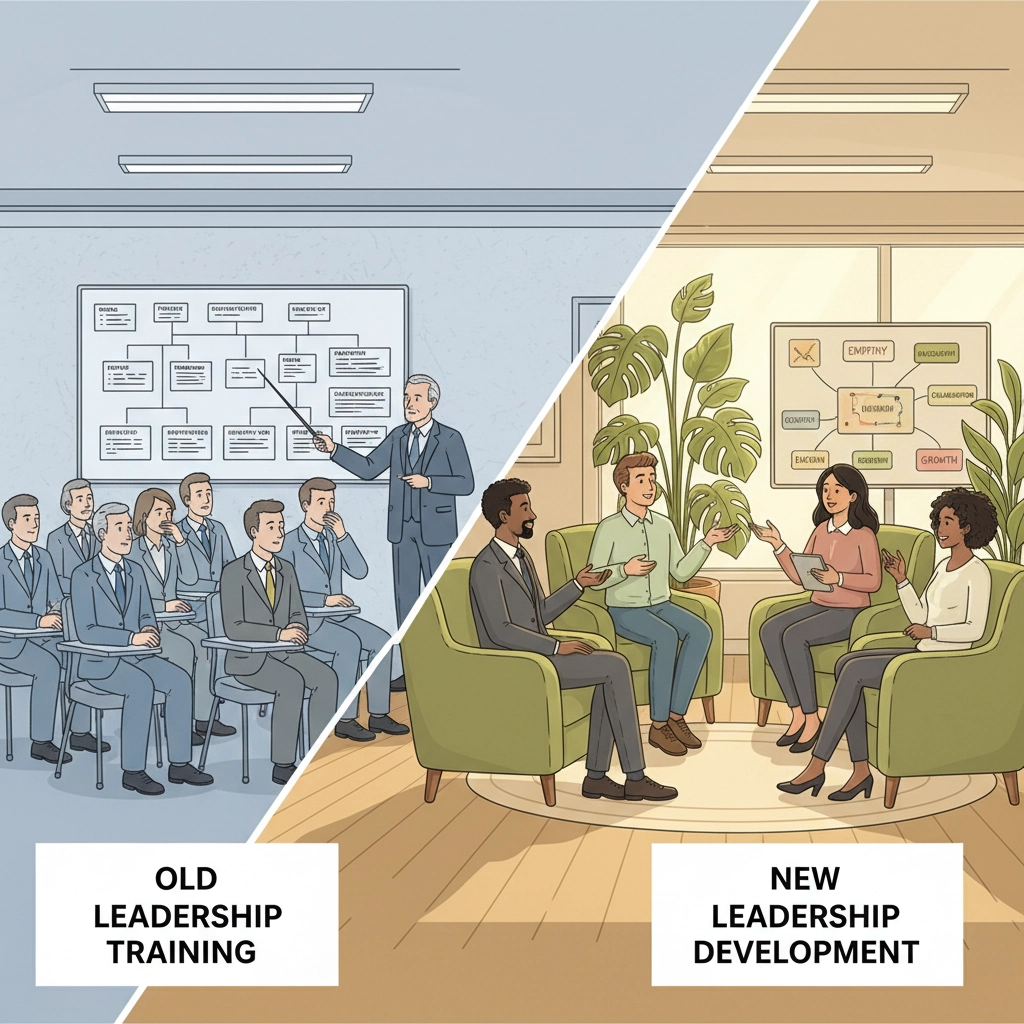
Here's what these programs consistently miss:
They ignore the inner work. You can't lead others authentically if you don't know who you are. Most training focuses on external behaviors but never addresses the internal foundation that sustainable leadership requires.
They skip the wisdom piece. Business schools teach you how to analyze and strategize, but they don't teach you how to tap into deeper wisdom: the kind that helps you make decisions that feel right in your gut, not just on a spreadsheet.
They treat stress as a side effect, not a core issue. Burnout isn't just something that happens to weak leaders: it's a systemic problem that requires intentional prevention and management strategies.
The Missing Ingredient: Structure Meets Soul
Here's where things get interesting. What if the answer isn't choosing between traditional business frameworks and more soulful approaches to leadership? What if the magic happens when you combine both?
Think about the most effective leaders you know. They probably have two things: solid systems and authentic presence. They know how to run efficient meetings AND how to connect with people on a human level. They can read a P&L statement AND read the energy in a room.
This is what we call the structure-meets-soul approach to leadership development.
The Structure Side:
- Proven executive coaching frameworks
- Systems for managing larger teams efficiently
- Clear processes for decision-making and delegation
- Tools for measuring and improving team performance
The Soul Side:
- Ancestral wisdom about sustainable leadership
- Practices for maintaining authenticity under pressure
- Techniques for accessing intuition in decision-making
- Methods for staying grounded during chaos

When you integrate both, something powerful happens. You become a leader who can handle the tactical demands of modern management while staying connected to your deeper purpose and values. You can set boundaries without becoming cold. You can be empathetic without losing authority.
Real Talk: Why This Matters More Than Ever
Millennial managers are facing a unique challenge: they're trying to befriend their direct reports while still maintaining authority. Some critics call this a "toxic tendency," but we see it differently. The desire to connect authentically with your team isn't toxic: it's human. The problem is that traditional training never taught these managers how to maintain genuine care while establishing clear professional boundaries.
This generation popularized "ghosting" in personal relationships, often struggles with direct conflict, yet they're expected to have difficult conversations and make tough decisions daily. That's not a character flaw: that's a skills gap that proper training should address.

The solution isn't to become more robotic or to abandon empathy. It's to develop what we call "grounded authority": the ability to lead with both strength and heart.
How to Bridge the Gap
If you're a millennial manager feeling overwhelmed, here's the truth: you don't need to choose between being effective and being authentic. You need both. Here's how to start bridging that gap:
Get Clear on Your Values
Before you can lead others authentically, you need to know what you stand for. What are the non-negotiables that guide your decisions? What kind of leader do you want to be remembered as?
Learn to Access Your Intuition
Those gut feelings about hiring decisions, strategic directions, or team conflicts? They're not just random: they're data. Learn to trust and interpret this internal guidance system alongside your analytical skills.
Develop Sustainable Practices
You can't pour from an empty cup. Build daily practices that recharge your energy and keep you grounded. This isn't luxury self-care: it's leadership maintenance.
Master Difficult Conversations
Empathy doesn't mean avoiding hard truths. Learn how to have challenging discussions with care and clarity. Your team needs you to address problems, not ghost them.

Create Systems That Support Connection
Structure doesn't have to kill soul. Design processes that create space for authentic relationships while maintaining efficiency and accountability.
The Leadership Revolution We Need
The executive coaching industry has grown 54% in recent years, but most approaches still focus on either pure business strategy or pure personal development. The future belongs to leaders who can integrate both: who understand that sustainable success requires both effective systems and authentic presence.
Millennial managers aren't broken: they're pioneering a new kind of leadership that the world desperately needs. They just need training that matches their reality and helps them develop the full spectrum of skills required for modern leadership.
The burnout crisis isn't inevitable. It's a symptom of misaligned training and unrealistic expectations. When we give leaders tools that address both the tactical and the human dimensions of leadership, we create managers who can thrive while helping others do the same.
Your generation is already changing how we think about work, mental health, and authentic leadership. Now it's time to change how we think about leadership development too. The future of work depends on leaders who can handle the complexity of modern business while staying true to their humanity: and that's exactly what you're capable of becoming.

