


As coaches, we're always walking that fine line between pushing our clients forward and recognizing when they've hit a wall. The ability to spot limitations isn't about being negative or pessimistic, it's about being realistic and strategic. When you can accurately identify what's holding your client back, you can design interventions that actually work.
Think of it like being a detective. You're gathering clues, connecting dots, and building a complete picture of what's really going on beneath the surface. Some limitations are obvious, but others are sneaky little things that hide in plain sight.
Why Limitations Matter More Than You Think
Here's the thing most coaches get wrong: they focus so much on strengths and possibilities that they gloss over the real barriers. But limitations aren't the enemy, they're valuable information. When you know exactly what you're working with, you can create realistic timelines, set achievable goals, and avoid the frustration that comes from repeatedly hitting the same walls.
Every client comes with their own unique mix of capabilities and constraints. Some are internal, like mindset blocks, skill gaps, or emotional patterns. Others are external, like time constraints, resource limitations, or environmental factors. The key is developing a systematic way to spot all of them.

The Four-Corner Assessment Exercise
Let me walk you through one of my favorite exercises for getting a complete picture of where your client stands. I call it the Four-Corner Matrix, and it's simple but incredibly revealing.
Draw a square and divide it into four sections:
Top Left: Internal Strengths
What does your client do well? What natural talents, learned skills, or positive mindset patterns do they bring to the table? This isn't just about professional capabilities, include personal qualities, life experiences, and ways of thinking that serve them.
Top Right: External Resources
What support systems, opportunities, and resources exist in their environment? This includes everything from supportive relationships and financial resources to industry connections and available learning opportunities.
Bottom Left: Internal Limitations
Here's where we dig into the constraints that come from within. Think skill gaps, limiting beliefs, emotional patterns that don't serve them, or habits that hold them back. Also consider things like learning preferences that might make certain approaches more challenging.
Bottom Right: External Constraints
What environmental factors are working against them? Time constraints, budget limitations, unsupportive relationships, industry challenges, or geographic restrictions all fit here.
The magic happens when you start looking at how these four corners interact with each other. Can internal strengths compensate for external constraints? Are external resources being held back by internal limitations? This gives you a roadmap for where to focus your coaching efforts.
Observation Techniques That Actually Work
Most coaches rely too heavily on what clients tell them directly. Don't get me wrong, client self-reporting is important. But people have blind spots, and sometimes they don't even realize what their real limitations are.
Watch the Pattern, Not Just the Words
Pay attention to what keeps coming up. If a client repeatedly mentions time constraints, but you notice they spend significant time on activities that don't align with their goals, the real limitation might be prioritization skills, not actual time availability.
Listen for the Language They Use
"I can't" versus "I don't want to" versus "I don't know how to", these all point to different types of limitations. "I can't" might be a resource constraint or limiting belief. "I don't want to" could indicate values misalignment or emotional resistance. "I don't know how to" is usually a skill gap that's completely solvable.
Notice the Energy Shifts
When you bring up certain topics or suggestions, how does your client's energy change? Do they light up, shut down, get defensive, or become vague? These reactions often reveal limitations they haven't explicitly stated.

The Three-Layer Deep Dive
Sometimes limitations hide behind other limitations. What looks like a skill gap on the surface might actually be a confidence issue. What appears to be a time constraint might really be a boundary-setting problem.
Layer 1: The Surface Issue
This is what the client tells you directly. "I don't have enough time to work on this project."
Layer 2: The Underlying Pattern
Dig a little deeper. What's creating the time constraint? Poor planning, difficulty saying no, perfectionist tendencies, or competing priorities?
Layer 3: The Root Cause
What's driving the underlying pattern? Fear of disappointing others, imposter syndrome, unclear values, or past experiences that shaped current behaviors?
Most coaching happens at Layer 1, but real transformation happens when you address Layer 3. The exercise is to keep asking "What's behind that?" until you hit something that feels foundational.
The Limitation Mapping Exercise
Here's a practical exercise you can use in your next coaching session. It works particularly well when a client feels stuck or keeps hitting the same obstacles.
Step 1: Brain Dump
Have your client list everything they think is holding them back from achieving their goal. Don't edit or judge: just get it all out on paper.
Step 2: Categorize
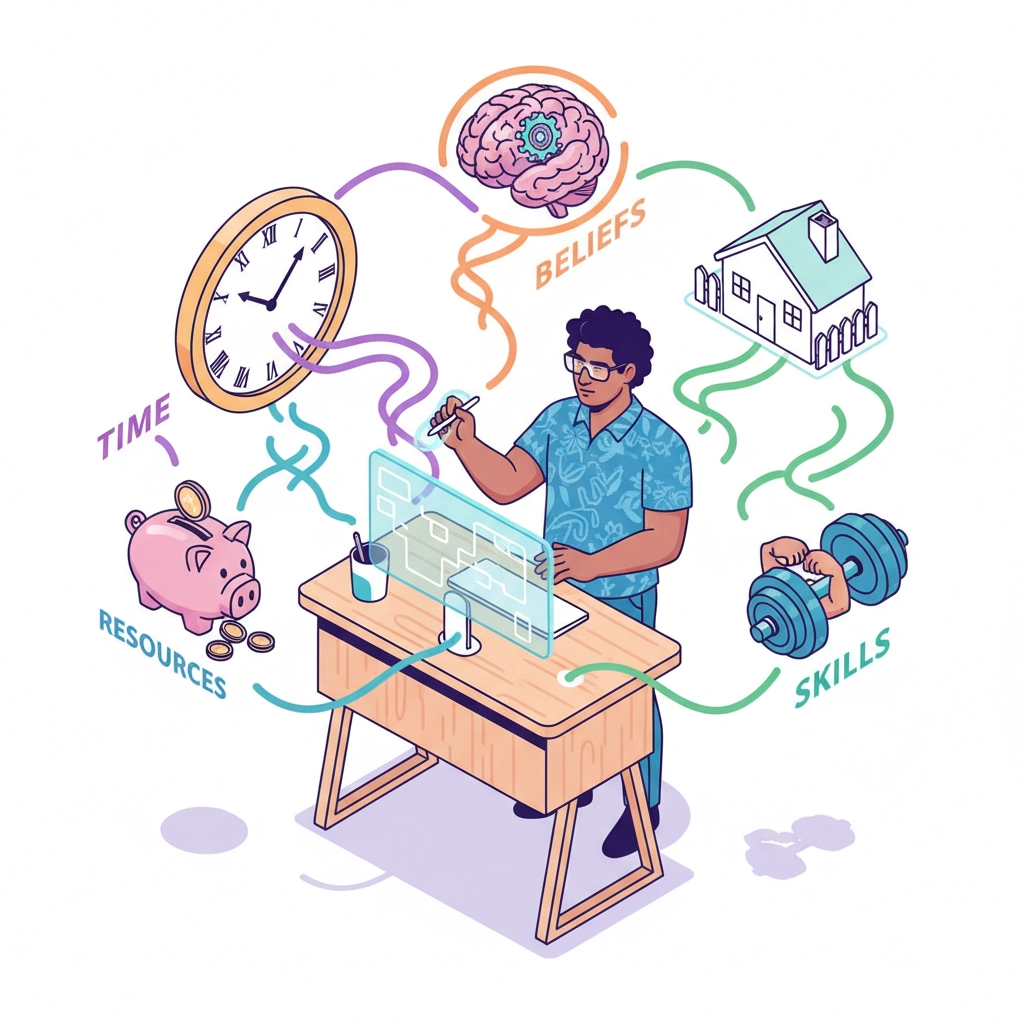
Sort these limitations into categories: Skills, Resources, Beliefs, Habits, Environment, Relationships, Health, and Time. This helps you see patterns and identify the areas that need the most attention.
Step 3: Rate Impact and Control
For each limitation, have them rate two things on a scale of 1-10:
- How much is this actually impacting their progress?
- How much control do they have over changing it?
High impact + high control = priority areas for immediate action
High impact + low control = areas where you might need creative workarounds
Low impact items = probably not worth significant energy
Turning Limitations into Action Plans
Once you've identified the real limitations, the next step is deciding what to do about them. Not every limitation needs to be "fixed." Some need to be worked around, some need to be accepted, and some can actually become strengths when reframed properly.
Skill-Based Limitations
These are often the easiest to address because they're concrete and learnable. Create specific learning plans, find appropriate resources, or connect them with mentors who can fill the gap.
Belief-Based Limitations
These require more nuanced approaches. Sometimes it's about gathering evidence that contradicts the limiting belief. Other times it's about finding ways to move forward despite the belief until new experiences create natural shifts.
Resource-Based Limitations
Get creative here. Can external resources compensate for internal limitations? Can internal strengths help overcome external constraints? Sometimes the solution isn't getting more resources: it's using existing resources more strategically.
The Strengths-First Approach
Here's something counterintuitive: sometimes the best way to address limitations is to lean into strengths instead of trying to fix weaknesses. If someone is naturally analytical but struggles with creative thinking, maybe the solution isn't creativity training: maybe it's finding analytical approaches to innovation.
This doesn't mean ignoring limitations, but it does mean being strategic about which ones deserve your energy and which ones are better managed through compensation strategies.
Making It Stick
The most elegant limitation assessment in the world won't help if insights don't translate into action. Build regular check-ins into your coaching process where you revisit the limitation map and adjust strategies based on what's working and what isn't.
Remember, limitations aren't static. As clients grow and circumstances change, new constraints emerge while others become irrelevant. The exercise of spotting limitations isn't a one-time activity: it's an ongoing part of effective coaching that helps you stay responsive and relevant to where your client actually is, not where you think they should be.
The goal isn't to eliminate every limitation: it's to work with them intelligently so they become stepping stones rather than roadblocks.

