

Something's shifting in the coaching world, and it's happening fast.
While some companies are going all-in on AI-powered coaching platforms and others are doubling down on traditional human-only approaches, the smartest leaders are discovering a third path: blended coaching that combines the best of both worlds.
This isn't about replacing human coaches with algorithms or dismissing AI as a passing fad. It's about recognizing that when artificial intelligence and human wisdom work together, they create something neither could achieve alone, deeper, more sustainable transformation.
The Limits of Going All-In on Either Side
The AI-Only Trap
Pure AI coaching platforms promise scale, consistency, and data-driven insights. And they deliver, to a point. AI can analyze your communication patterns, identify skill gaps, and serve up personalized recommendations 24/7. But here's what it can't do: understand the story behind your resistance to feedback, navigate the complex emotions that come with leadership transitions, or provide the kind of nuanced support that helps you push through when things get messy.
The Human-Only Blind Spot
Traditional coaching, on the other hand, excels at building trust, reading between the lines, and providing the emotional support that drives real behavioral change. But even the most skilled human coach has limitations. They can't simultaneously track patterns across thousands of interactions, provide real-time feedback during your actual work, or scale their insights to help entire organizations transform.
The breakthrough happens when you stop seeing this as an either/or choice.
What Blended Coaching Actually Looks Like
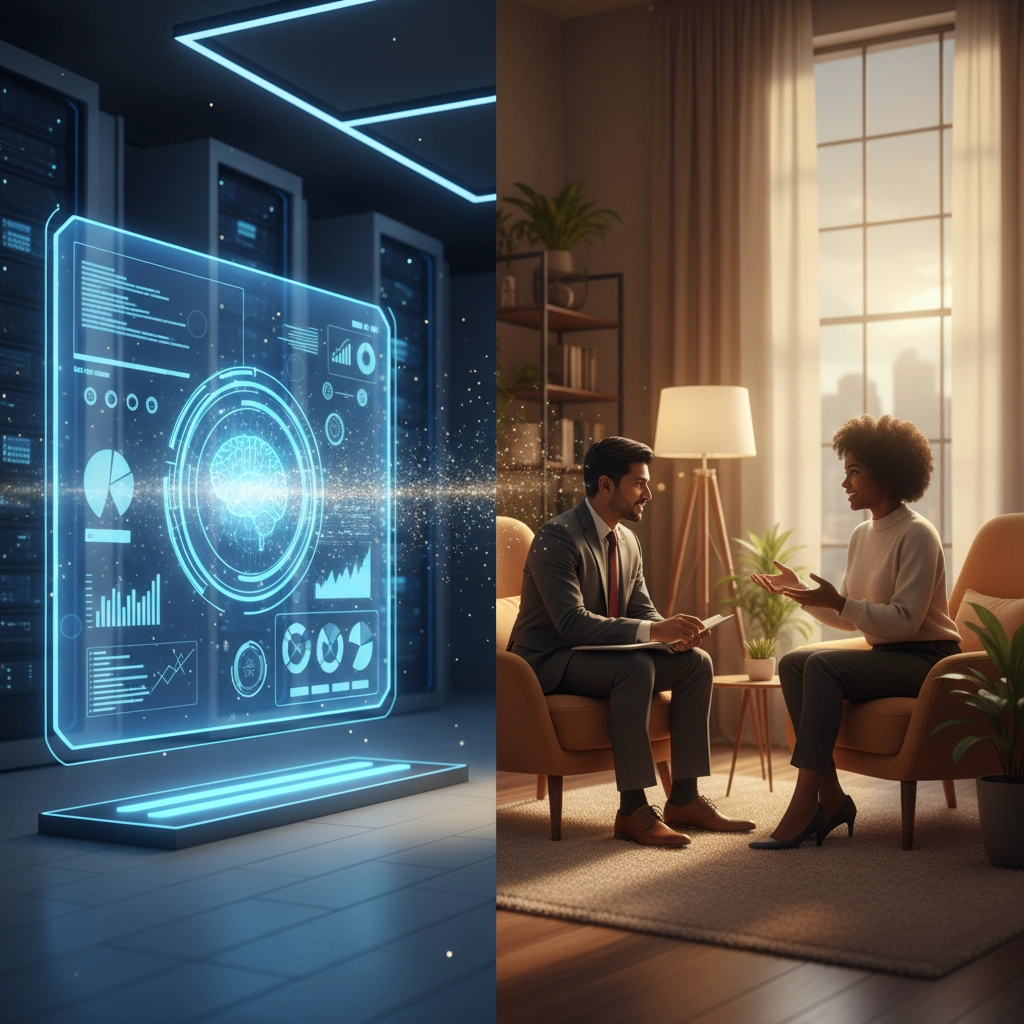
Blended coaching isn't just using a coaching app while also meeting with a human coach. It's a thoughtfully integrated approach where AI and human intelligence complement each other at every level.
Picture this: AI continuously analyzes your emails, meeting patterns, and communication style, surfacing insights about your leadership blind spots. Your human coach takes these data-driven insights and helps you understand what they mean in the context of your specific goals, challenges, and organizational dynamics. The AI provides structured practice scenarios where you can rehearse difficult conversations. Your human coach helps you process what comes up emotionally and adapts your approach based on your unique leadership style.
The AI handles the heavy lifting of data analysis and pattern recognition. The human coach focuses on what humans do best: building connection, navigating complexity, and inspiring lasting change.
Why This Combination Unlocks Deeper Transformation
Speed Meets Depth
AI accelerates the coaching process by identifying patterns and opportunities faster than any human could. Meanwhile, human coaches ensure that speed doesn't come at the expense of depth. They help you understand not just what to change, but why it matters and how to sustain it.
Scale Meets Personalization
One of the biggest advantages of blended coaching is solving the scale-versus-personalization dilemma. AI can provide consistent, high-quality baseline support to hundreds of people simultaneously, while human coaches focus their limited time on the most impactful, personalized interventions.
Data Meets Intuition
AI excels at seeing patterns you might miss: like how your stress levels correlate with your communication effectiveness, or how certain types of meetings drain your energy. Human coaches excel at interpreting these patterns through the lens of your values, goals, and circumstances. Together, they create a more complete picture than either could provide alone.

Real-World Applications That Drive Results
Leadership Transition Support
When executives step into new roles, AI can track their adaptation patterns: which stakeholder relationships are developing well, where communication breakdowns are happening, and what leadership behaviors are emerging. Human coaches use these insights to provide targeted support during the most critical moments of transition.
Team Dynamics Optimization
AI can analyze team communication patterns, meeting effectiveness, and collaboration metrics across an entire organization. Human coaches take these insights and work with individual leaders to understand how their personal leadership style impacts team performance and culture.
Skill Development That Sticks
Instead of relying solely on periodic coaching sessions, blended approaches create continuous development loops. AI provides ongoing feedback and practice opportunities, while human coaches ensure that new skills integrate naturally with existing leadership patterns and organizational requirements.
The Implementation Framework That Works
Start with Clear Role Definition
The most effective blended coaching programs clearly define what AI handles versus what human coaches focus on. AI typically excels at data collection, pattern recognition, consistent feedback delivery, and providing practice opportunities. Human coaches focus on relationship building, emotional support, complex problem-solving, and strategic guidance.
Create Continuous Integration Points
Rather than treating AI and human coaching as separate experiences, build regular integration points where insights flow between both components. Human coaches should regularly review AI-generated insights, while AI systems should incorporate human coach observations and priorities.
Focus on Complementary Strengths
The goal isn't to make AI more human or humans more data-driven. It's to leverage each component's natural strengths. AI provides the analytical foundation and consistent support structure. Human coaches provide the emotional intelligence and strategic thinking that transforms insights into lasting change.
The Future Is Already Here
Forward-thinking organizations aren't waiting to see how this trend develops: they're actively experimenting with blended approaches because they're seeing results. Leaders report faster skill development, more sustainable behavioral changes, and higher satisfaction with their coaching experience.
But here's the crucial point: this isn't about the technology itself. It's about recognizing that human development is complex enough to benefit from every available tool, when those tools are thoughtfully integrated.
Where Axis Becoming Fits
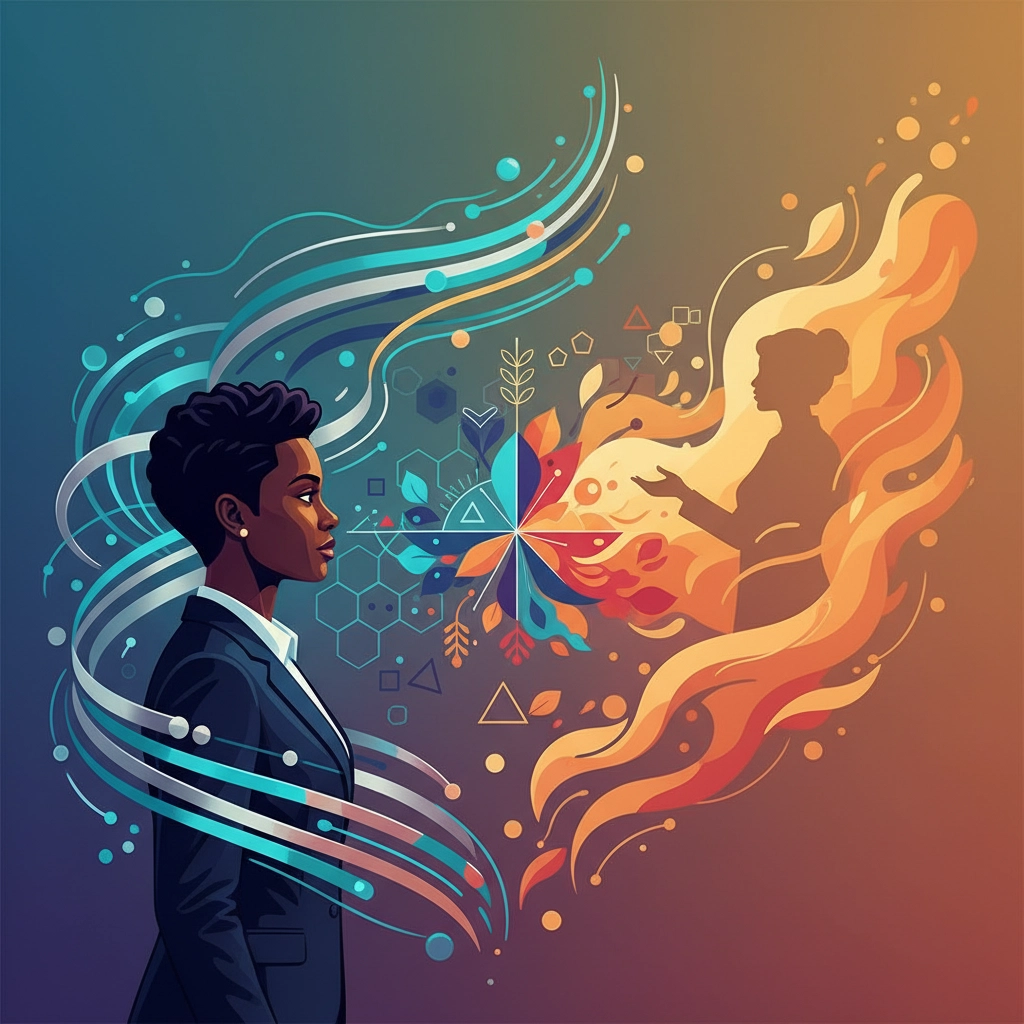
At Axis Becoming, we've positioned ourselves at the intersection of cutting-edge technology and timeless human development principles. We're not trying to replace the human element of coaching: we're amplifying it. Our approach recognizes that true transformation happens when you combine AI's ability to see patterns with human coaches' ability to understand meaning.
We're working with leaders who want the efficiency and insights that AI provides, but who also understand that lasting change requires the kind of deep, personalized support that only comes from genuine human connection.
The Bottom Line
Blended coaching isn't the future of professional development: it's the present for organizations serious about results. The question isn't whether AI or human coaching is better. The question is how thoughtfully you can combine them to create something more powerful than either approach alone.
The leaders who thrive in the coming years will be those who embrace this both/and approach: leveraging technology's strengths while doubling down on uniquely human capabilities. They'll use AI to see more clearly and act more precisely, while relying on human wisdom to ensure that all that efficiency serves a deeper purpose.
The transformation that happens when artificial intelligence meets human wisdom isn't just additive: it's multiplicative. And that's the kind of edge that creates lasting competitive advantage in a world where both technology and human potential are evolving faster than ever.

