


Here's the uncomfortable truth: if you're investing in burnout recovery coaching for your leaders, you're already too late.
Don't get me wrong: recovery coaching saves careers and sometimes lives. But it's like having the world's best emergency room while your building is on fire. You're treating symptoms of a system that's fundamentally broken.
The real problem? Most organizations are stuck in a reactive cycle. Leader burns out, gets coaching, recovers, goes back to the same environment that created the burnout in the first place. Rinse and repeat.
It's time for a different approach: burnout prevention architecture.
The Recovery Coaching Trap
Recovery coaching operates on a flawed premise: that burnout is an individual problem requiring personal solutions. It asks exhausted leaders to build better boundaries, practice self-care, and manage their energy while leaving the burnout-generating machine completely intact.
Here's what typically happens: Your high-performing VP works 70-hour weeks, skips vacations, and answers emails at midnight because "that's what it takes." When they finally crash, you send them to a coach who teaches breathing exercises and time management. They feel better, return to work, and within months they're right back where they started.
Why? Because the system that created their burnout hasn't changed one bit.
The always-on culture is still there. The impossible deadlines remain. The expectation to be available 24/7 persists. You've essentially asked someone to develop superhuman resilience instead of creating humane working conditions.

What Is Burnout Prevention Architecture?
Think of prevention architecture like building codes for leadership wellbeing. Instead of waiting for the structure to collapse and then rebuilding it, you design systems that can't collapse in the first place.
Burnout prevention architecture operates at three levels:
Structural: The policies, processes, and systems that either create or prevent burnout conditions. This includes realistic project timelines, appropriate staffing levels, and decision-making frameworks that don't require heroic efforts to succeed.
Cultural: The unwritten rules about what's valued, rewarded, and normalized. This is where you shift from glorifying the leader who never sleeps to celebrating the one who delivers exceptional results within sustainable hours.
Individual: The personal systems and skills that support sustainable performance. Unlike recovery coaching, this isn't about fixing broken people: it's about equipping healthy people to thrive in healthy systems.
Why Leaders Need This More Than Anyone
Leadership burnout isn't just a personal tragedy: it's an organizational catastrophe. When leaders burn out, the damage cascades through entire teams, departments, and companies. Employee engagement drops, innovation stalls, and your best people start updating their LinkedIn profiles.
But here's what makes leadership burnout particularly insidious: leaders are often the last to recognize it and the most resistant to addressing it. They've been rewarded their entire careers for pushing through, working harder, and sacrificing personal needs for professional success.
They operate in isolation, making complex decisions under constant pressure while maintaining an image of strength and capability. They rarely have safe spaces to admit vulnerability or acknowledge struggle. By the time they're ready for recovery coaching, the damage to their health, relationships, and organizations is often severe.
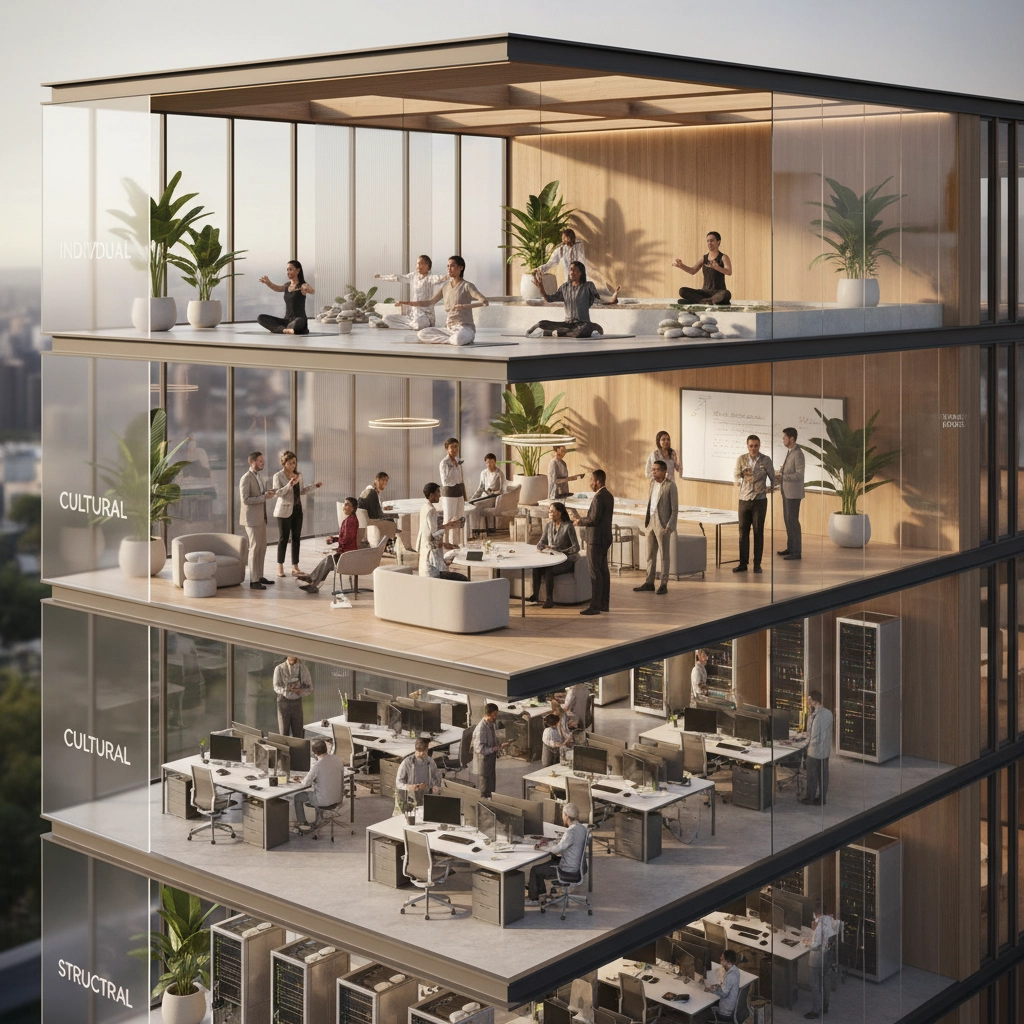
Prevention architecture acknowledges that sustainable leadership means rejecting the outdated, pressure-cooker models in favor of conscious leadership grounded in empathy, vulnerability, and shared purpose. It creates environments where leaders can perform at their best without destroying themselves in the process.
The Hidden Costs of the Recovery-Only Approach
When you rely solely on recovery coaching, you're not just missing prevention opportunities: you're actively reinforcing the systems that create burnout.
The Individual Cost: Leaders learn to see burnout as a personal failing. They develop better coping mechanisms but don't address the root causes. They become more resilient to toxic conditions instead of changing those conditions.
The Organizational Cost: You maintain systems that consistently break your best people. You normalize unsustainable practices. You signal that individual resilience matters more than systemic health.
The Competitive Cost: While you're cycling leaders through recovery programs, competitors with prevention architecture are attracting and retaining top talent, moving faster, and innovating more effectively.
Building Your Prevention Architecture
Real prevention architecture requires changes at every level of your organization. Here's where to start:
Redesign Your Operating Systems: Standardize processes to eliminate last-minute chaos. Align staffing with project scope. Create realistic timelines based on actual capacity, not wishful thinking. Build buffers into your planning instead of assuming everything will go perfectly.
Restructure Incentives: Stop rewarding people for working unsustainable hours. Start celebrating teams that deliver exceptional work within reasonable timeframes. Make boundary-setting a leadership competency, not a character flaw.
Redefine Leadership Development: Train leaders in sustainable high performance, not just high performance. Teach them to recognize early warning signs in themselves and their teams. Give them tools to push back on unrealistic demands and negotiate sustainable solutions.

Create Support Infrastructure: Establish regular check-ins focused on wellbeing, not just deliverables. Provide mental health resources before people need them. Make vacation time truly disconnected and guilt-free.
The Axis Becoming Approach
At Axis Becoming, we've seen too many talented leaders cycle through recovery programs without addressing the underlying conditions that created their burnout. That's why our approach focuses on building prevention architecture from the ground up.
We work with organizations to identify the structural and cultural factors that generate unsustainable demands. We help leaders develop the skills to create healthy, high-performing environments. And we support the long-term cultural shifts that make burnout the exception rather than the rule.
Because here's the thing: burnout isn't inevitable. It's not the price of success or a badge of honor. It's a design flaw in how we think about leadership and performance.
The Prevention Imperative
The most successful organizations of the next decade won't be the ones that get best at fixing burned-out leaders: they'll be the ones that rarely create them in the first place.
Prevention architecture isn't just about avoiding the negative outcomes of burnout. It's about unlocking the positive potential that emerges when leaders can perform sustainably. When they have the mental space for strategic thinking, the emotional capacity for meaningful relationships, and the physical energy for sustained excellence.
The choice is simple: keep investing in recovery programs for preventable problems, or build systems that create conditions for sustainable success.
One approach treats symptoms. The other eliminates the disease.
Which future are you building?

