


Here's something that might surprise you: most senior executives have never received proper emotional intelligence training. Not the real kind, anyway.
I was facilitating an executive offsite recently where I asked a room full of VPs a simple question: "How many of you have ever received intentional development in emotional intelligence?" Not one hand went up. These were brilliant leaders who'd been coached on strategy, execution, and performance metrics: but never on the human side of leadership.
And that's exactly why most EI training is failing executives today.
The Surface-Level Problem
Walk into any corporate training room and you'll see the same approach everywhere: surface-level behavioral fixes. "Ask better questions." "Give more praise." "Practice active listening." It's all behavioral coaching that treats symptoms instead of causes.
The problem isn't that executives don't know they should listen better or ask more thoughtful questions. The problem is they can't sustain these behaviors when it matters most: under pressure, during conflict, or when facing uncertainty.

Most EI training focuses on the behavioral layer without addressing what I call the "internal operating system." It's like trying to change a computer program by only adjusting what you see on the screen, while the underlying code remains unchanged.
Why Smart People Struggle with Emotional Intelligence
Here's what most people don't understand: the issue isn't character, it's conditioning.
Smart executives got to where they are by being analytical, results-focused, and fast-moving. They've internalized beliefs like "emotions are distractions," "vulnerability is risky," and "if I loosen control, I lose authority." These beliefs weren't wrong: they were useful at one point in their careers.
But they don't scale with leadership complexity.
As you move up the organizational ladder, the challenges become less about your technical expertise and more about your ability to navigate complex human dynamics. The same analytical approach that made you successful as an individual contributor can actually work against you as a senior leader.

I've seen brilliant executives who can analyze market trends with laser precision but completely miss the emotional undercurrents in their own team meetings. They're not lacking intelligence: they're operating with an outdated internal system.
The Generic Training Trap
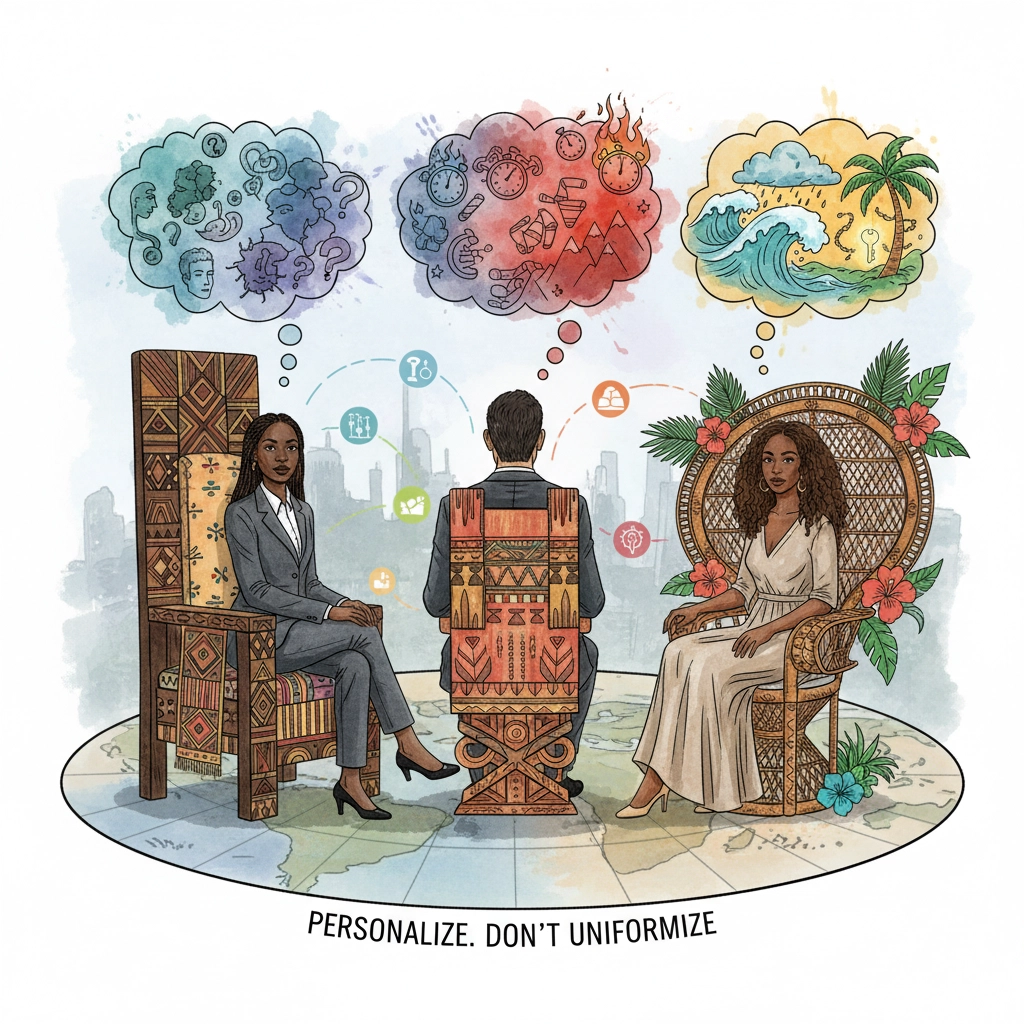
Most EI programs treat all executives the same way. They use cookie-cutter approaches that ignore cultural background, personality differences, and individual leadership contexts.
But here's what I've learned after years of working with leaders: a introverted engineering VP needs a different approach to emotional intelligence than an extroverted sales director. A founder building their first leadership team faces different challenges than a seasoned executive joining an established organization.
Generic training programs can't account for these nuances. They offer one-size-fits-all solutions to deeply personal challenges.
The Logic-Emotion Mismatch
Here's another fundamental flaw: most executive coaching tries to solve emotional problems with logical solutions.
You can't coach someone to be emotionally intelligent using the same analytical framework you'd use to solve a business problem. Emotions don't respond to logic the way spreadsheets do. They require a different approach entirely.
Traditional training programs are built on the assumption that if you understand emotional intelligence conceptually, you can apply it practically. But knowledge isn't transformation. Understanding empathy intellectually is completely different from being able to access empathy when you're stressed, frustrated, or under pressure.
The Missing Context
Most EI training completely ignores the cultural and organizational context that executives operate in. They teach emotional skills in a vacuum, without considering the real-world pressures and expectations these leaders face.
A CEO dealing with board pressure has different emotional challenges than a VP managing a restructuring. A leader in a high-growth startup faces different situations than someone in a traditional corporate environment. Yet most training programs act as if context doesn't matter.
What Actually Works: The Deeper Approach
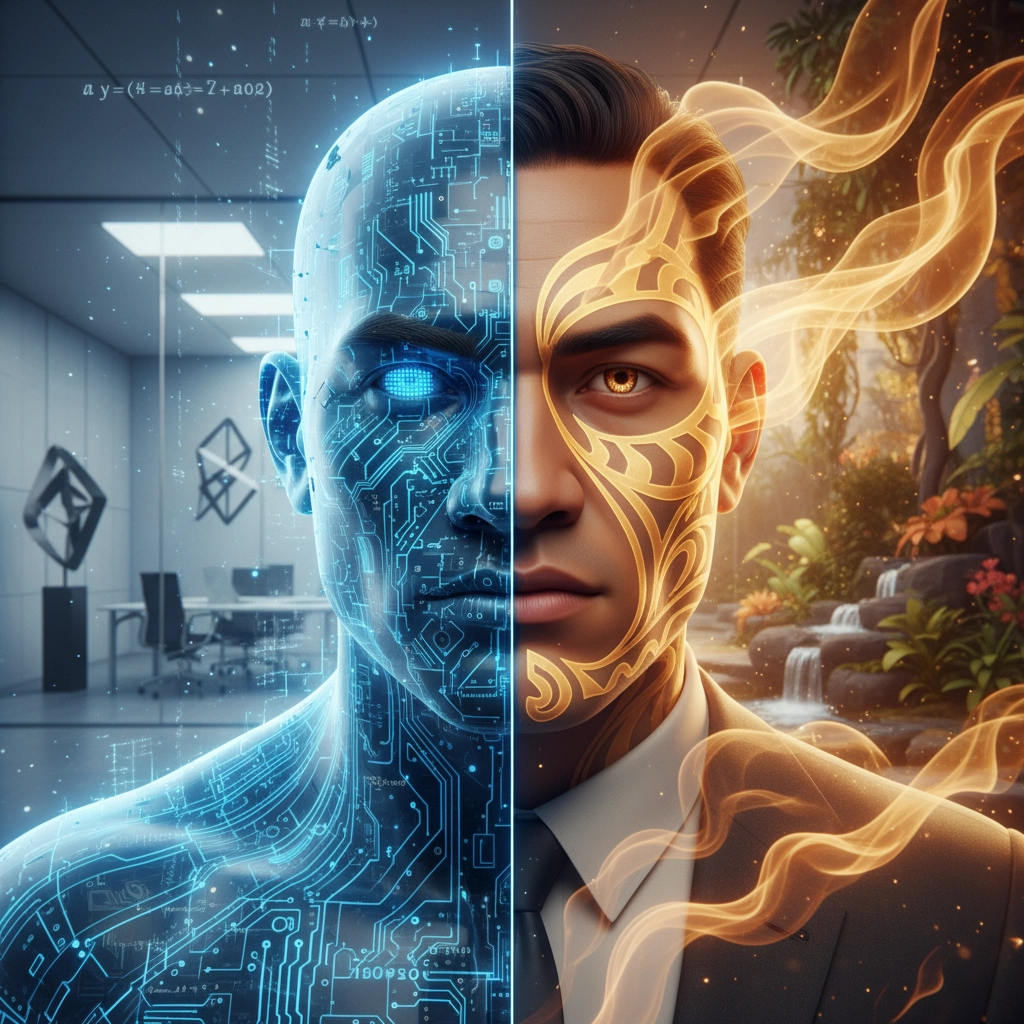
Real emotional intelligence development starts with understanding your internal operating system: the beliefs, assumptions, and patterns that drive your behavior, especially under stress.
It requires looking at how your cultural background, personal history, and professional identity shape how you show up as a leader. It means integrating who you are as a person with who you need to be as a leader, rather than trying to adopt someone else's playbook.
The most effective approach I've seen combines three elements:
Self-Awareness That Goes Deeper: Not just knowing your strengths and weaknesses, but understanding the underlying patterns that create them. Why do you default to control when things get uncertain? What triggers your defensive responses? How does your cultural background influence your leadership style?
Contextual Application: Learning how to apply emotional intelligence in your specific leadership context, with your particular team, in your industry, with your organizational culture.
Integration Over Imitation: Instead of trying to adopt someone else's emotional style, discovering how to be authentically emotionally intelligent in a way that aligns with who you are.
The Real Cost of Surface-Level Training
When EI training fails, the costs show up in subtle but significant ways: consistent turnover in key roles, interdepartmental tension, burned-out high performers, resistance to feedback, and quiet disengagement in meetings.
These symptoms often persist despite substantial investments in leadership development programs. Organizations keep throwing money at surface-level solutions while the deeper issues remain unaddressed.
Moving Beyond Checklists
The executives who experience real transformation are those who move beyond behavioral checklists to deeper personal work. They're willing to examine their conditioning, understand their triggers, and develop emotional skills that are integrated with their authentic leadership style.
This isn't about becoming a different person. It's about becoming a more complete version of yourself as a leader.
The future of emotional intelligence training isn't in more sophisticated behavioral techniques or better assessment tools. It's in approaches that honor the complexity of human beings and the contexts they operate in, creating space for genuine transformation rather than surface-level skill acquisition.
Because at the end of the day, emotional intelligence isn't just another leadership competency to check off a list. It's about becoming the kind of leader people actually want to follow: and that requires going much deeper than most training programs are willing to go.

