


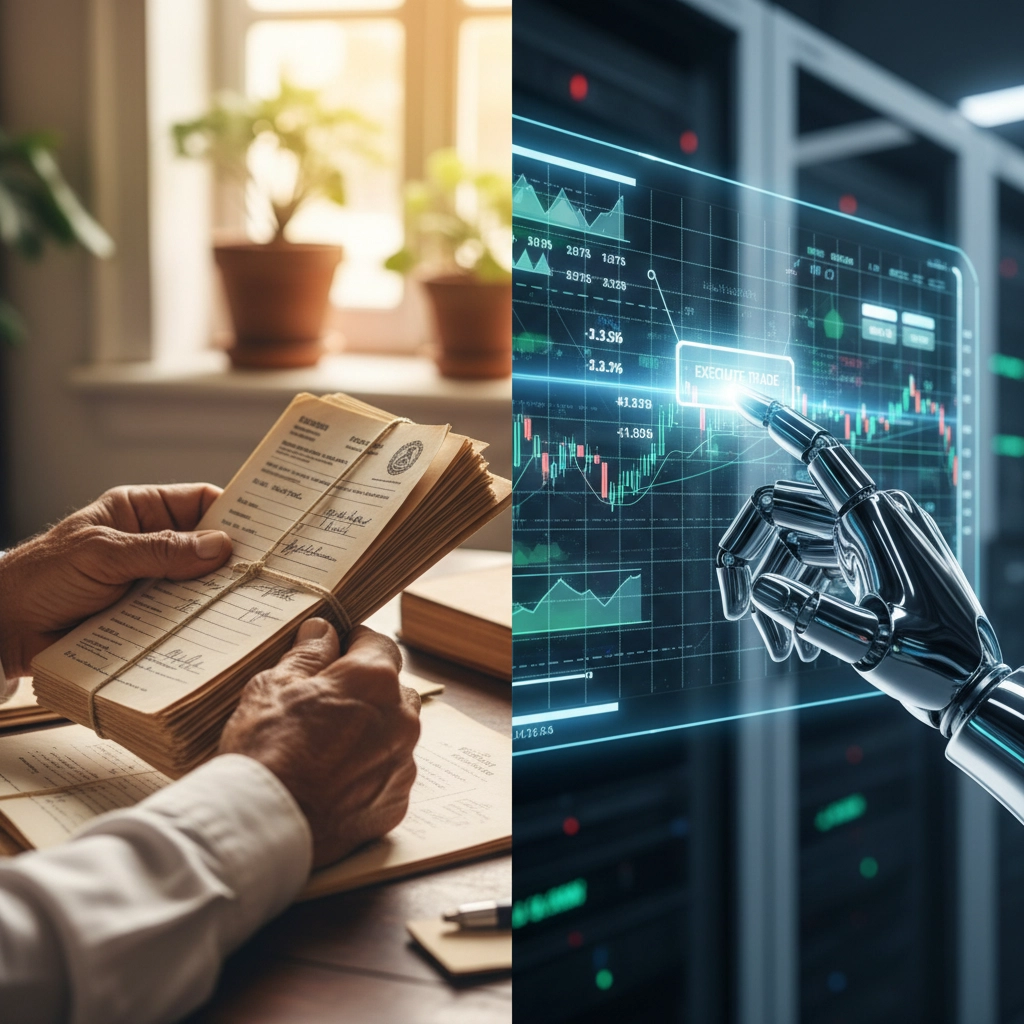
The fintech revolution promised us a world where investing would be democratized, efficient, and emotion-free. Robo-advisors would handle our portfolios, AI would predict market moves, and algorithms would remove human bias from financial decisions. Sounds perfect, right?
Well, here we are in 2025, and something interesting is happening. While fintech has absolutely delivered on its efficiency promises, there's a growing realization that we might have automated away something pretty crucial: the human soul of financial decision-making.
The Automation Promise (And What It Actually Delivered)
Let's give credit where it's due. Fintech has genuinely revolutionized investing in ways that seemed impossible just a decade ago. Today, someone with $50 can access sophisticated portfolio management tools that were once reserved for millionaires. AI handles risk analysis, portfolio rebalancing, and tax-loss harvesting with precision that would make traditional advisors jealous.
The numbers don't lie: automated investment platforms have reduced operational costs, eliminated human error in routine tasks, and made investing accessible to millions who were previously shut out. Digital platforms process transactions in milliseconds, provide real-time insights, and offer personalized recommendations based on vast datasets.

For wealth management firms, this automation has been a godsend. Portfolio managers can now focus on strategy while algorithms handle the grunt work. The efficiency gains are undeniable.
But here's where things get interesting: and where coaching becomes not just relevant, but absolutely critical.
The Algorithm Blind Spots
Despite all this technological wizardry, something fundamental is missing. Algorithms can crunch numbers, but they can't read the room. They can predict market trends, but they can't predict when your client is about to make an emotionally-driven decision that could derail their financial future.
Think about it: when was the last time you made a purely rational financial decision? Maybe never. Our relationship with money is deeply emotional, tied to our values, fears, dreams, and past experiences. And this is where even the most sophisticated AI hits a wall.
The Emotional Intelligence Gap
AI can't detect the hesitation in someone's voice when they say they're ready to invest aggressively. It can't read body language that screams "I'm terrified" even when the verbal response is "I'm confident." A human coach picks up on these subtle cues and knows when to dig deeper, when to slow down, or when to completely reframe the conversation.
The Experience Factor
Algorithms are trained on historical data, but they've never actually felt the gut-punch of a market crash or the euphoria of a bull run. They've never sat across from someone who's crying because they're drowning in debt or struggling to explain complex financial concepts to a client who's overwhelmed.
Human coaches bring lived experience: they understand what it feels like to make financial mistakes, to recover from setbacks, and to navigate the messy realities of money management. This experiential wisdom simply can't be coded.
Why Coaching Becomes More Important, Not Less
Here's the counterintuitive truth: the more we automate financial processes, the more valuable human coaching becomes. It's not despite the technology: it's because of it.
The Overwhelm Factor
With so many automated tools, dashboards, and data points available, many investors are suffering from analysis paralysis. They have access to more information than ever before, but they don't know what to do with it. They need someone to help them cut through the noise and focus on what actually matters for their specific situation.
The Trust Paradox
While people appreciate the efficiency of automated systems, they often don't trust them with their biggest life decisions. Money represents security, dreams, and freedom: concepts that require human understanding to navigate properly.
The Accountability Challenge
Apps can send notifications and reminders, but they can't provide the kind of personalized accountability that creates lasting behavioral change. A human coach knows what motivates each individual client and can adapt their approach accordingly.
Where Human Coaches Add Irreplaceable Value
Let's get specific about what human coaches bring that no algorithm can replicate:
Values-Based Decision Making
Financial decisions aren't just about maximizing returns: they're about aligning money choices with personal values and life goals. A coach can help someone navigate the tension between short-term desires and long-term objectives in ways that algorithms simply can't.
Behavioral Change
Most financial problems aren't really about money: they're about behavior. And changing behavior requires understanding the psychology behind it, building trust, and providing ongoing support through the inevitable setbacks. This is deeply human work.

Creative Problem-Solving
Life doesn't fit into neat categories, and neither do financial challenges. Maybe someone needs to care for an aging parent while saving for their own retirement, or they want to start a business while paying off student loans. These complex, interconnected challenges require creative solutions that only human experience can provide.
Emotional Support
Money conversations can be deeply vulnerable. People share their fears, dreams, shame, and hopes when discussing finances. They need someone who can hold space for these emotions while providing practical guidance: something that requires genuine empathy and emotional intelligence.
The Hybrid Future: Best of Both Worlds
The most successful financial approaches in our AI-driven world aren't choosing between human or machine: they're combining both strategically.
Smart coaches are leveraging fintech tools to handle routine analysis and administrative tasks, freeing them up to focus on the high-value human elements: understanding client motivations, building trust, facilitating difficult conversations, and helping people make behavioral changes that stick.
Think of it this way: let the algorithms handle the "what" (what investments to choose, what the numbers suggest), while human coaches focus on the "why" and "how" (why these choices align with your values, how to actually implement changes in your life).

What This Means for Business Leaders
If you're leading a fintech company, a financial services firm, or any organization dealing with money and people, this trend has huge implications:
Don't Replace, Enhance: Instead of using technology to replace human touchpoints, use it to enhance them. Free your human talent to focus on the work that only humans can do.
Invest in Coaching Skills: As routine tasks become automated, the premium is on human skills like emotional intelligence, coaching, and behavioral change expertise. These become your competitive advantages.
Design for Connection: Your tech should make human connection easier, not replace it. The best fintech platforms create opportunities for meaningful human interaction, not eliminate them.
The Bottom Line
Fintech without soul isn't just philosophically hollow: it's commercially limiting. While automation can make financial processes more efficient, it can't make them more human. And when it comes to money: something so deeply tied to our emotions, values, and life goals: the human element isn't just nice to have. It's essential.

The companies and professionals who thrive in this automated investment world will be those who understand this fundamental truth: technology should amplify human wisdom, not replace it. The future belongs to hybrid models where intelligent automation handles the computational heavy lifting, while skilled human coaches focus on what machines can't: understanding the person behind the portfolio.
In a world of cold algorithms, warm leadership isn't just a competitive advantage: it's the key to creating financial solutions that actually serve human needs. And that's something worth coaching toward.

