


Remember when the biggest tech disruption in leadership was PowerPoint presentations? Those days feel like ancient history. Today, we're staring down a much bigger shift: artificial intelligence isn't just changing how we work: it's revolutionizing how we lead and develop as leaders.
But here's the thing that caught me off guard: the most successful organizations aren't choosing between AI or human coaching. They're doing both. Welcome to hybrid leadership, where your next performance review might involve insights from an AI coach and your trusted human mentor.
What Exactly Is Hybrid Leadership?
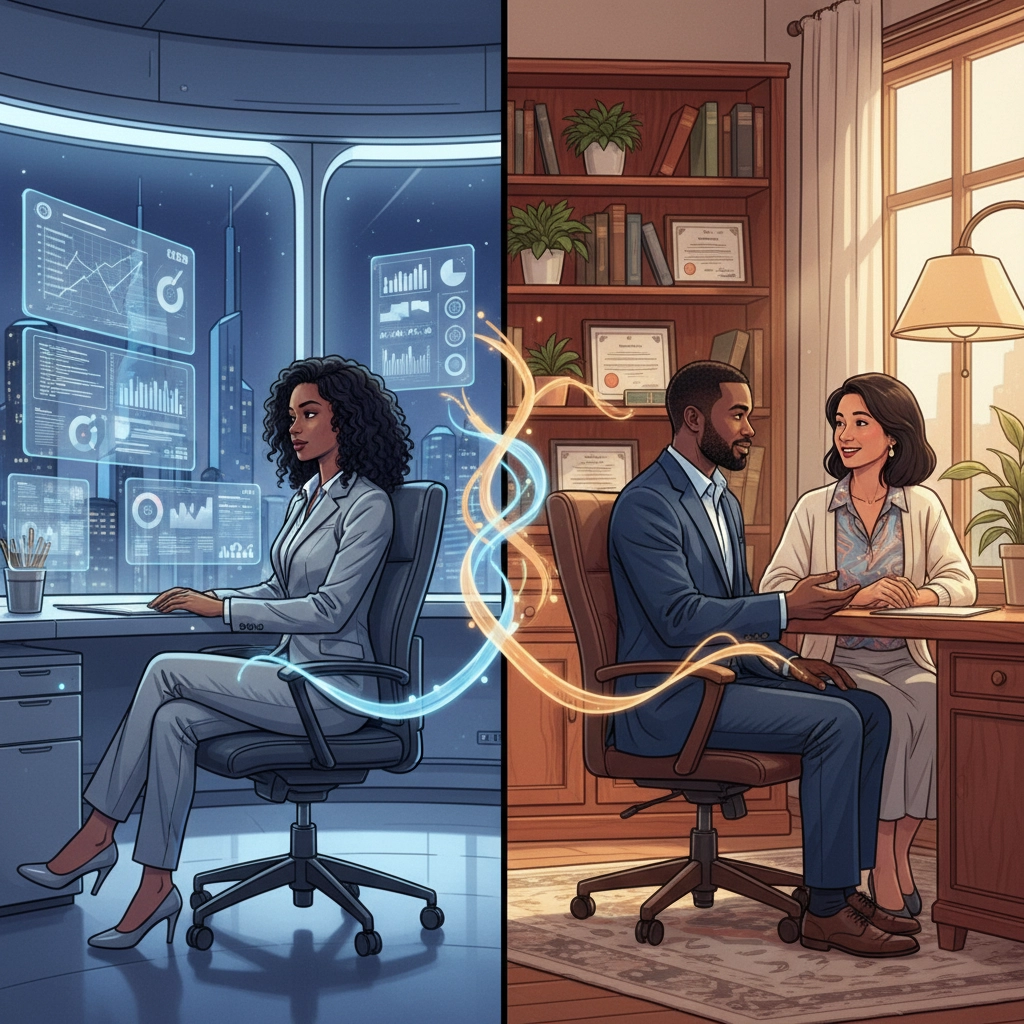
Think of hybrid leadership as the ultimate tag-team approach. Instead of viewing AI and human expertise as competitors in some corporate cage match, smart leaders are realizing these two forces work better together than apart.
Here's how it breaks down: AI brings the heavy analytical lifting: processing massive amounts of data, spotting patterns in your leadership behavior you'd never notice, and offering personalized insights at scale. Meanwhile, human coaches handle the stuff that requires a beating heart and lived experience: reading between the lines, navigating complex office politics, and helping you work through those messy emotional challenges that come with leadership.

The magic happens when these two approaches complement each other. Your AI coach might flag that you interrupt team members 40% more often during high-pressure meetings. Your human coach helps you understand why you do this and develops strategies that actually stick.
How AI-Human Coaching Partnerships Actually Work
Let's get practical. In a hybrid coaching setup, you're not just getting twice the advice: you're getting two different types of intelligence working in sync.
The AI Side of Things
Your AI coaching partner is like having a performance analyst who never sleeps. It tracks your communication patterns, analyzes your decision-making speed, and even monitors how your leadership style impacts team engagement. Some platforms can simulate challenging leadership scenarios, letting you practice difficult conversations or crisis management without real-world consequences.
The beauty here is consistency and scalability. While a human coach might meet with you monthly, AI coaching provides ongoing, in-the-moment guidance. Heading into a tough performance review? Your AI coach can remind you of strategies that worked in similar situations.
The Human Element
But here's where human coaches shine: they get the context that AI still misses. When your AI coach flags that you've been more decisive lately, your human coach understands that it's probably because you're stressed about the upcoming merger, not because you've suddenly become a more confident leader.
Human coaches excel at helping you navigate the unwritten rules, office dynamics, and those "gut feeling" moments that leadership often requires. They're also better at challenging your assumptions and helping you explore blind spots that require emotional intelligence to unpack.
The Benefits Are Pretty Compelling
Organizations using hybrid coaching models are seeing some interesting results. Leaders report feeling more supported because they have access to guidance whenever they need it, not just during scheduled coaching sessions.
Personalization at Scale
One of the biggest wins is personalization. AI can analyze how you learn best and adapt its coaching style accordingly. If you're a visual learner who responds better to data than stories, your AI coach adjusts. If you prefer bite-sized insights over lengthy reports, it adapts to that too.
Real-Time Feedback Loops
Traditional coaching often suffers from the "Monday morning quarterback" problem: you get feedback about last week's leadership decision when it's too late to course-correct. Hybrid coaching solves this by providing real-time insights when you can actually use them.
Continuous Development
Instead of episodic coaching sessions, you get continuous development. Your AI coach might notice you tend to avoid difficult conversations on Fridays and gently remind you about this pattern. Your human coach can then work with you on why Friday afternoon feels more challenging and develop strategies to overcome this.
But Are You Actually Ready for This?
Here's the million-dollar question: just because hybrid coaching exists doesn't mean every leader or organization is ready for it. There are some real prerequisites worth considering.
Comfort with Technology
If you're still frustrated by your smartphone's autocorrect, jumping into AI coaching might feel overwhelming. The good news is that most AI coaching platforms are designed to be user-friendly, but you do need basic comfort with technology.
Openness to Data-Driven Insights
AI coaching provides a lot of data about your leadership patterns. If you're not comfortable having your communication style analyzed and quantified, this approach might not be for you. The most successful hybrid coaching relationships involve leaders who are curious about these insights rather than defensive.

Cultural Readiness
Your organization's culture plays a huge role. If your company is still debating whether to allow remote work, it might not be ready for AI-powered leadership development. Hybrid coaching works best in environments that already embrace innovation and data-driven decision making.
The Challenges Nobody Talks About
Let's be honest about the potential pitfalls. Over-reliance on AI insights can sometimes lead to "analysis paralysis": when you have so much data about your leadership style that you second-guess every decision.
There's also the risk of losing the human touch that makes leadership authentic. If you're constantly optimizing your communication based on AI recommendations, you might start to feel like you're performing a role rather than leading authentically.
Privacy Concerns
AI coaching requires sharing a lot of data about your leadership behavior, communication patterns, and decision-making processes. Some leaders understandably feel uncomfortable with this level of analysis, especially if they're not clear about how this data is stored and used.
Making It Work: Practical Implementation
If you're intrigued by hybrid coaching, start small. Many platforms offer trial periods or limited implementations that let you test the waters without committing fully.
Look for solutions that clearly define the roles of AI versus human coaching. The best hybrid models don't blur these lines: they make them crystal clear. Your AI coach handles data analysis and pattern recognition. Your human coach handles emotional intelligence, context, and complex problem-solving.
Questions to Ask
Before diving in, consider: What specific leadership challenges are you trying to address? Are you looking for help with communication, decision-making, team management, or strategic thinking? Different hybrid coaching solutions excel in different areas.
Also, think about your learning style. Do you prefer structured programs or flexible, responsive guidance? Some AI coaching platforms are highly structured, while others adapt more dynamically to your needs.
The Future Is Already Here
The organizations that figure out hybrid leadership coaching now will have a significant advantage as AI becomes more prevalent in the workplace. This isn't about replacing human connection in leadership: it's about enhancing human potential through thoughtful AI integration.

The leaders who thrive will be those who can work effectively alongside AI systems while maintaining the authenticity, empathy, and emotional intelligence that drive organizational culture and engagement.
Ready or not, hybrid leadership is becoming the new normal. The question isn't whether AI will impact how we develop as leaders: it's whether we'll be intentional about how we integrate these new capabilities.
The most successful leaders of the next decade won't be those who resist this change or those who embrace it blindly. They'll be the ones who thoughtfully combine the analytical power of AI with the irreplaceable human elements that make leadership truly transformative.
So, are you ready for an AI-human coaching partnership? The future of your leadership development might depend on your answer.

