


You've mastered the spreadsheets, conquered quarterly targets, and climbed the corporate ladder. Yet somehow, your global team meetings feel like diplomatic disasters. Your expansion into Asian markets flopped spectacularly. That promising multicultural hire just quit, citing "cultural misalignment."
Welcome to the cultural intelligence gap: the leadership blind spot that's quietly demolishing executive credibility across boardrooms worldwide.
The Numbers Don't Lie
Here's a stat that should make every C-suite executive pause: 76% of senior business leaders lack cultural intelligence. That's not a small oversight: that's a systemic failure that's costing companies millions in botched deals, failed expansions, and talent hemorrhaging.
Meanwhile, over 70% of the global workforce comes from collectivist and hierarchical cultures, while most Western leadership training continues pushing individualistic values like autonomy and empowerment. It's like showing up to a potluck with only hamburgers when everyone else brought diverse cuisines.
The gap isn't just embarrassing: it's expensive. Companies are spending fortunes on damage control after cultural missteps, from costly rebranding efforts to litigation management. But the real cost? The daily friction of culturally clueless leadership that generates project delays, collaboration failures, and innovation stagnation.

When "Leadership Best Practices" Become Cultural Landmines
Traditional executive coaching has created a dangerous myth: that effective leadership is universal. Newsflash: it's not.
Take feedback delivery, for example. That direct, "radical candor" approach that works beautifully with your Gen Z marketing team? It can be perceived as disrespectful aggression in cultures that value indirect communication and face-saving. What you think is "being authentic" might actually be cultural tone-deafness.
Or consider decision-making styles. Western leadership loves quick, autonomous decisions. But in many cultures, consensus-building and collective input aren't just nice-to-haves: they're fundamental to respect and buy-in. Rush the process, and you'll lose your team before you even realize you had them.
The problem isn't that executives are bad people. It's that they've been trained in culturally narrow frameworks while operating in increasingly diverse environments. It's like learning to drive on country roads then wondering why you keep crashing in city traffic.
The Trust Erosion Spiral
Cultural intelligence gaps don't just create awkward moments: they systematically erode trust. And once trust is broken across cultural lines, rebuilding it is exponentially harder.
Here's how it typically unfolds: You implement a "proven" strategy that worked in your previous role. It flops with your multicultural team. You double down, assuming they need more time to "get it." Resistance increases. You label it as stubbornness or incompetence. They label you as culturally insensitive or out of touch.
The spiral accelerates. High-potential employees from diverse backgrounds start disengaging. Innovation suffers because psychological safety varies dramatically across cultures, and you're creating it for only one cultural subset. Eventually, talent walks out the door, taking their networks, insights, and potential contributions with them.

The Global Expansion Reality Check
Want to see cultural intelligence gaps in action? Watch companies attempt international expansion with culturally clueless leadership.
I've seen executives confidently march into emerging markets with strategies that worked in their home countries, only to face spectacular failures. They misread consumer behaviors, botch regulatory relationships, and alienate potential partners: all because they assumed their cultural lens was universal.
The executives who succeed globally aren't necessarily smarter or more experienced. They're culturally intelligent. They understand that business isn't just about numbers and processes: it's about people, relationships, and cultural contexts that shape every interaction.
Beyond Cultural Competence Theater
Most diversity and inclusion training treats cultural intelligence like a checkbox exercise. Take a workshop, learn about different holidays, avoid obvious faux pas: done. But real cultural intelligence goes deeper.
It's not about memorizing cultural facts or walking on eggshells. It's about developing the ability to read cultural contexts, adapt your communication style contextually, and create genuine psychological safety for people with different cultural backgrounds and worldviews.
This requires what we call "dual fluency": the ability to speak both corporate language and cultural wisdom. You need frameworks that work in boardrooms and the deep listening skills to understand what isn't being said across cultural contexts.
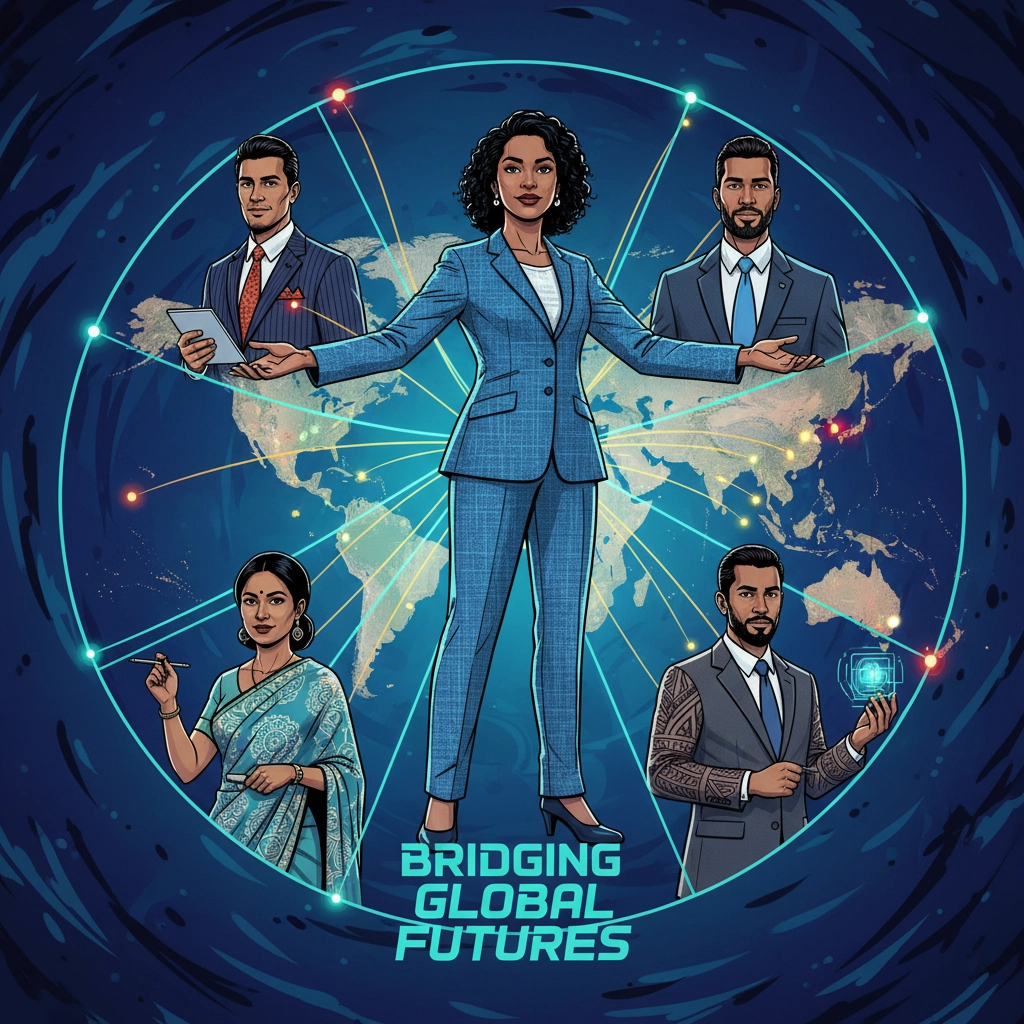
The AI-Human Coaching Revolution
Here's where the future of leadership development gets interesting. Traditional coaching approaches either focus on pure performance metrics or try to address cultural issues through theoretical frameworks. Both miss the mark.
The most effective approach combines data-driven assessment tools with deeply human cultural insights. AI can help identify blind spots and track behavioral patterns across cultural contexts. But human wisdom: especially from coaches with lived multicultural experience: provides the contextual understanding that transforms those insights into actionable leadership skills.
At Axis Becoming, we've seen this hybrid approach create breakthrough results. Leaders learn to assess their cultural assumptions, adapt their approaches contextually, and align their teams around shared values while honoring cultural differences.
Building Cultural Intelligence That Sticks
Developing real cultural intelligence isn't about cultural sensitivity training or international etiquette courses. It requires three foundational shifts:
Assessment: Honestly evaluating your cultural biases and blind spots. Most executives are unconsciously incompetent: they don't know what they don't know about their cultural assumptions.
Adaptation: Building the skills to shift communication styles, decision-making approaches, and leadership methods based on cultural context. This isn't about being inauthentic: it's about being contextually appropriate.
Alignment: Creating team dynamics that honor cultural diversity while building toward shared objectives. This means developing systems that work across cultural differences, not despite them.
The leaders who master this don't just avoid cultural landmines: they unlock the innovation potential that comes from truly diverse perspectives.

The Competitive Advantage Hidden in Plain Sight
While your competitors struggle with cultural intelligence gaps, you have an opportunity to build a sustainable competitive advantage. Organizations with culturally intelligent leadership experience smoother international operations, fewer cultural conflicts, more effective negotiations, and stronger partnerships.
More importantly, they access innovation opportunities that culturally limited competitors can't see. When you can genuinely harness diverse perspectives, you solve problems in ways that homogeneous thinking never could.
The cultural intelligence gap isn't just costing executives their credibility: it's limiting organizational potential in an interconnected world where cultural fluency is becoming as essential as financial literacy.
The question isn't whether you can afford to develop cultural intelligence. It's whether you can afford not to.
Ready to close the gap? The future belongs to leaders who can navigate cultural complexity with both strategic frameworks and deep wisdom. Everything else is just performance theater in a multicultural world.

