

Something strange is happening in corner offices and boardrooms across the country. High-achieving executives are sitting across from coaches, asking questions that would have sounded foreign just a decade ago: "I've hit all my targets, but why do I feel empty?" "How do I lead authentically when I'm not even sure who I really am?" "Can I be successful AND fulfilled?"
Welcome to the fragmentation crisis: the growing chasm between professional achievement and personal meaning that's leaving even the most successful leaders feeling incomplete.
The Great Divide: When Success Splits You in Two
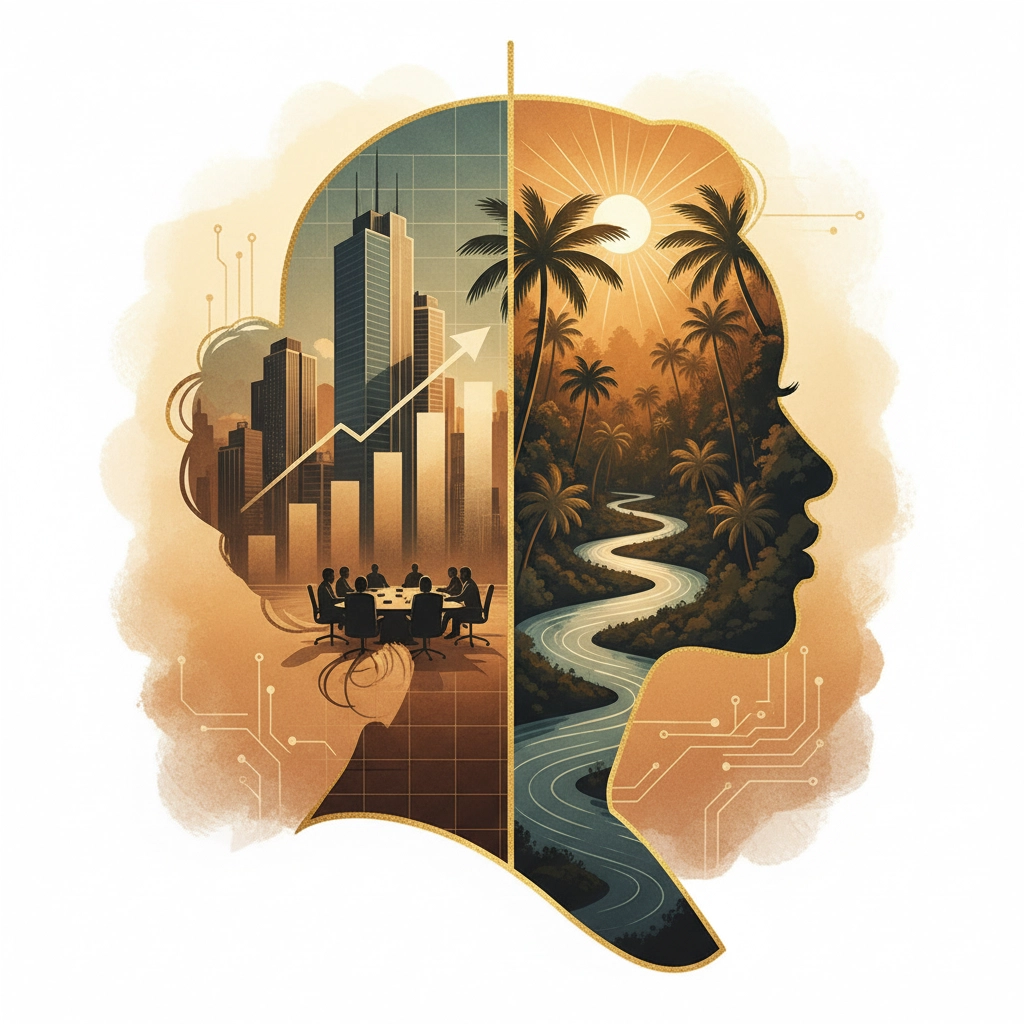
Today's high achievers are living fragmented lives. There's the "corporate them": polished, strategic, always hitting targets. And then there's the "real them": the person who questions whether any of this matters, who craves deeper connection and purpose.
This isn't just about work-life balance. It's about identity fracture. Many executives have become so skilled at playing their professional roles that they've lost touch with their authentic selves. They speak fluently about market disruption and competitive advantages but stumble when asked about their values or what brings them joy.

The symptoms are everywhere. Record levels of executive burnout. Leaders who excel at managing teams but can't manage their own emotions. Entrepreneurs who build impressive companies but feel like strangers to themselves. The old playbook of "fake it till you make it" worked for climbing the ladder, but it's failing when it comes to finding lasting satisfaction.
Why Traditional Coaching Falls Short
Most executive coaching operates in one of two lanes, and neither addresses the full picture.
Lane One: The Corporate Approach
Traditional business coaching focuses on performance metrics, leadership competencies, and strategic thinking. It's all about optimizing the professional persona: making you better at the game you're already playing. While valuable, this approach often reinforces the very fragmentation that's causing the problem.
Lane Two: The Personal Development Approach
On the flip side, life coaches and therapists dive deep into personal growth, values, and emotional well-being. But many lack the business acumen to help high achievers navigate their complex professional realities. They might help you find your authentic self, but they can't always bridge that discovery back to your leadership role.
The result? Executives ping-pong between business coaches who don't address their deeper needs and personal coaches who don't understand their professional pressures. The fragmentation continues.
The Bilingual Coach: Speaking Both Languages Fluently
High achievers are increasingly seeking something different: coaches who are genuinely bilingual in both corporate and soul language. These are professionals who can discuss quarterly projections and quarterly life reviews with equal sophistication. They understand both market positioning and life positioning.

What makes these coaches different? They've walked in both worlds. Many have corporate backgrounds: they've sat in those boardrooms, made those tough decisions, felt those pressures firsthand. But they've also done deep personal work. They've studied psychology, spirituality, human development. They know what it feels like to achieve external success while feeling internally empty, and they've found their way to integration.
This dual fluency allows them to meet high achievers where they are, speaking their language while gently introducing new vocabularies of meaning and purpose.
The Integration Solution in Action
So what does this integrated approach actually look like? Instead of treating professional and personal development as separate tracks, bilingual coaches help clients see them as interconnected aspects of a whole life.
Conscious Leadership Development
Rather than just developing leadership skills, they focus on conscious leadership: leading from authentic values while achieving business results. They ask questions like: "How does your personal mission align with your company's mission?" and "What would leadership look like if it came from your deepest values?"
Values-Based Goal Setting
Instead of setting goals based purely on external metrics, they help clients align their professional objectives with their personal values. The result? Goals that energize rather than drain, that create sustainable motivation rather than temporary drive.
Emotional Intelligence in Context
They don't just teach emotional intelligence as an abstract concept: they help leaders understand how their emotional patterns show up in board meetings, difficult conversations, and strategic decisions. They connect the dots between personal emotional work and professional effectiveness.
Breaking Free from Achievement Identity Traps
Many high achievers get trapped in rigid identity patterns that served them well on the way up but now limit their growth. The bilingual coach helps identify and transform these patterns:
The Expert who feels they must know everything before acting: learning to lead with curiosity rather than certainty.
The Lone Wolf who struggles to collaborate: discovering that vulnerability can actually be a source of strength.
The Superstar who constantly needs to prove superiority: finding confidence that doesn't require others to be lesser.
The Perfectionist who sets impossible standards: embracing "good enough" as actually better when it allows for progress and learning.

These coaches understand that changing these patterns isn't just personal development: it's business development. More authentic leaders create better cultures, make better decisions, and achieve more sustainable results.
Why This Matters More Than Ever
We're living through a meaning crisis. The old definitions of success: title, salary, status: aren't providing the satisfaction they once did. Younger employees are demanding more purpose-driven leadership. Stakeholders are expecting companies to stand for something beyond profit. The business case for integration has never been stronger.
Meanwhile, the pace of change requires leaders who are adaptable, resilient, and innovative: qualities that come from inner strength and self-awareness, not just strategic thinking.
The Axis Becoming Approach
At Axis Becoming, we've built our practice around this exact need. We understand that the most effective coaching happens at the intersection of business acumen and human development. Our approach honors both the drive for achievement and the hunger for meaning.
We're not asking high achievers to choose between success and fulfillment: we're showing them how to have both. Because the truth is, the most sustainable high performance comes from alignment, not fragmentation.

The fragmentation crisis isn't a problem to be solved: it's an evolution to be embraced. It's high achievers growing beyond the limitations of one-dimensional success and demanding coaches who can support their full humanity while helping them reach even greater heights.
The future belongs to leaders who can speak both languages fluently: the language of results and the language of meaning, the vocabulary of strategy and the grammar of the soul. And they're looking for coaches who can help them master this bilingual leadership.
The question isn't whether you're ready for this integration: it's whether you're ready to work with coaches who can guide you there.

