

Ever wondered how engineers build tunnels through mountains, under rivers, or beneath busy city streets? They can't just start digging randomly and hope for the best. There's a precise, methodical process that turns an impossible-seeming vision into reality.
The same principle applies to achieving your biggest goals. When success feels like it's on the other side of an insurmountable obstacle, you need what I call the Success Tunnel Process: a systematic approach to boring through whatever's blocking your path to get exactly where you want to go.
Why Most People Get Stuck
Before we dive into the process, let's talk about why most people never break through their barriers. They treat goal achievement like a treasure hunt: wandering around hoping to stumble onto success. But here's the thing: when you're facing a mountain-sized challenge, you don't go around it, over it, or wait for it to move. You go through it.
That's exactly what tunnel engineers do. When the Swiss needed to connect the north and south through the Alps, they didn't give up because of the massive rock formations. They developed the Gotthard Base Tunnel: the world's longest railway tunnel. It took planning, precision, and an unwavering commitment to the process.
Your success works the same way.

Phase 1: Vision and Blueprint (Planning Your Success Route)
Every successful tunnel starts with a crystal-clear vision of where it needs to go. Engineers don't just know they want to get from Point A to Point B: they know exactly what Point B looks like, how many people will use the tunnel, what it needs to accomplish, and why it matters.
Your success tunnel needs the same clarity. This isn't about vague wishes like "I want to be successful" or "I want to make more money." We're talking about laser-focused precision:
- Where exactly are you now? (Your Point A)
- Where exactly do you want to be? (Your Point B)
- What does success look like in specific, measurable terms?
- Who will benefit when you achieve this goal?
- Why does this matter enough to dig through whatever obstacles lie ahead?
During this phase, you're creating your success blueprint. Engineers spend months or even years in this planning stage because they know that every decision made here affects everything that comes after. Rush this phase, and you'll end up digging in the wrong direction.
Phase 2: Site Investigation (Understanding Your Obstacles)
Here's where most people make a crucial mistake: they start digging before they understand what they're digging through. Tunnel engineers never do this. They conduct extensive site investigations, studying soil composition, rock formations, water tables, and potential hazards.
You need to do the same with your obstacles:
Internal obstacles: What beliefs, habits, or fears are blocking your path? What skills do you need to develop? Where are your knowledge gaps?
External obstacles: What market conditions, competition, or resource limitations are you facing? Who are the gatekeepers you need to navigate around?
Environmental factors: What's your current life situation? What support systems do you have? What constraints are you working within?
This isn't about getting discouraged by the challenges: it's about understanding them so you can plan accordingly. When engineers discovered unexpected water sources during the Channel Tunnel construction, they didn't quit. They adjusted their approach because they understood what they were dealing with.

Phase 3: Method Selection (Choosing Your Success Strategy)
Different types of ground require different tunneling methods. Soft soil might call for a tunnel boring machine, while hard rock might require controlled blasting. The method you choose depends entirely on what your site investigation revealed.
The same goes for your success strategy. There's no one-size-fits-all approach because everyone's obstacles are different:
The Steady Grind Method: Like a tunnel boring machine, this approach involves consistent daily progress. Perfect for building businesses, developing expertise, or changing ingrained habits.
The Strategic Breakthrough Method: Sometimes you need controlled explosions: bold moves that break through resistance quickly. Think launching a new product, making a career pivot, or having difficult conversations.
The Support-First Method: Like the New Austrian Tunnelling Method, this involves creating support systems as you progress. Ideal when you're building something while maintaining what you already have.
The Cut-and-Cover Method: Sometimes the best path is to temporarily expose everything, make major changes, then rebuild. This works for complete life overhauls or business restructuring.
Your site investigation tells you which method (or combination of methods) will work best for your specific situation.
Phase 4: Excavation and Construction (Doing the Work)
Now comes the part where most people get tunnel vision, literally. They start digging and lose sight of everything except the immediate work in front of them. But successful tunnel construction requires constant attention to multiple factors simultaneously.
Maintain structural integrity: As you progress toward your goal, you need to maintain the important areas of your life. Engineers install support structures as they dig to prevent collapse. You need to do the same with your relationships, health, and existing responsibilities.
Monitor conditions constantly: Ground conditions can change unexpectedly during tunneling. Your path to success will have surprises too. Stay flexible and ready to adjust your approach when new information emerges.
Manage resources carefully: Tunnel projects have strict budgets and timelines. Your success journey has resource constraints too: time, energy, money, and attention. Use them strategically.
Quality control at every step: Engineers don't wait until the end to check if the tunnel is built correctly. They verify quality at every phase. You should too. Regular progress reviews keep you on track and prevent costly mistakes.

Phase 5: Systems and Safety (Building for Long-term Success)
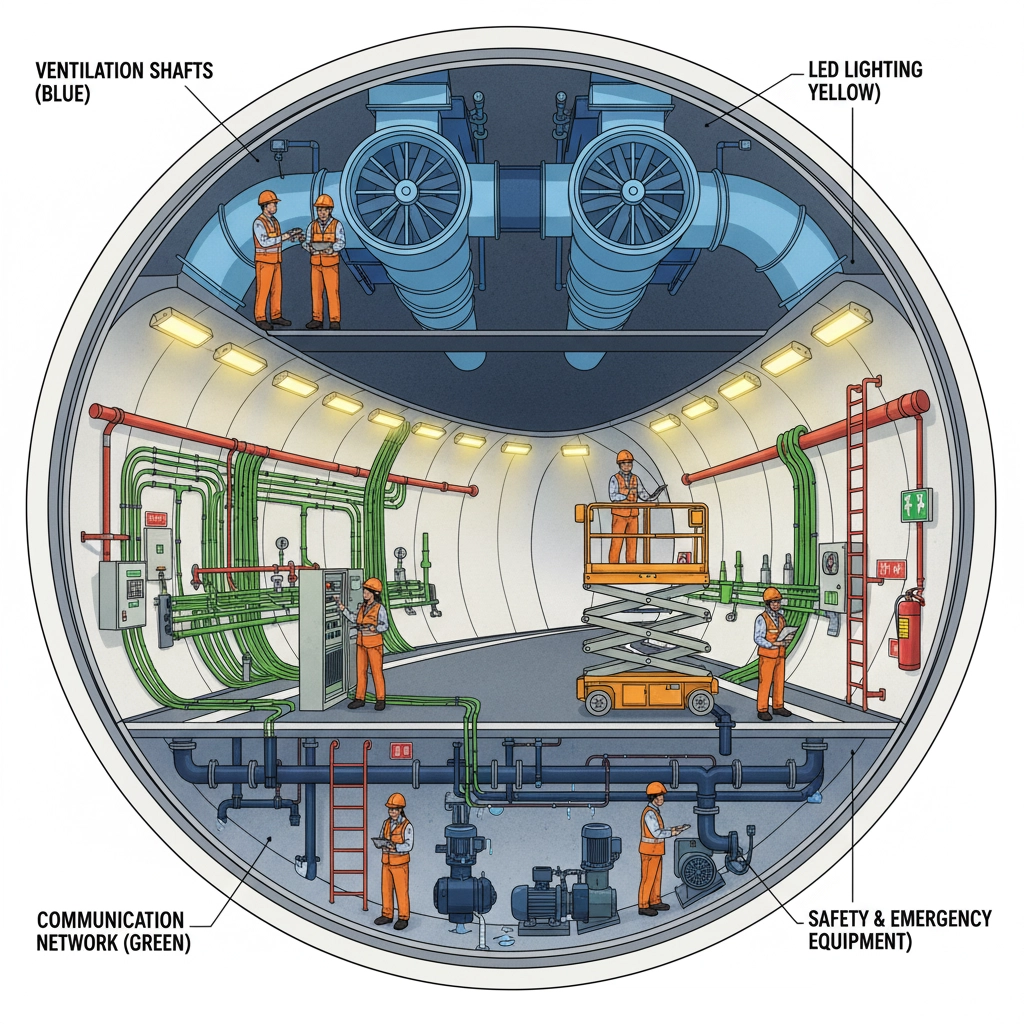
A tunnel isn't finished when the hole is dug. It needs ventilation systems, lighting, safety measures, drainage, and communication systems. These aren't afterthoughts: they're what make the tunnel actually usable.
Your success needs the same supporting systems:
Maintenance systems: How will you sustain what you've built? What ongoing activities are required?
Growth systems: How will you continue improving and expanding on your success?
Safety systems: What backup plans do you have if something goes wrong? How will you protect what you've achieved?
Communication systems: How will you stay connected with the people who matter as you operate at this new level of success?
These systems might not be the exciting part, but they're what separate temporary wins from lasting success.
Phase 6: Commissioning (Making It Real)
The final phase of tunnel construction is commissioning: rigorous testing to ensure everything works as designed before opening to the public. This isn't just checking that the tunnel exists; it's verifying that it accomplishes its intended purpose.
Your success tunnel needs the same final verification:
- Are you actually where you intended to be?
- Is this success sustainable?
- Are you prepared for the opportunities that come with this achievement?
- What did you learn that you can apply to your next success tunnel?
When to Use the Success Tunnel Process
This process isn't for every goal. Use it when:
- The path to your goal seems impossible or blocked
- You've tried other approaches without lasting success
- The stakes are high enough to justify systematic planning
- You're willing to commit to a process rather than looking for shortcuts
- You're facing obstacles that seem too big to go around
Your Next Steps
The Success Tunnel Process works because it mirrors how humans actually achieve breakthrough results in the real world. It's not about motivation or positive thinking: it's about systematic progress through systematic obstacles.
Start with Phase 1. Get absolutely clear about your Point A and Point B. Don't rush this. Engineers spend up to 30% of their total project time in planning because they know it determines everything that follows.
Remember: mountains don't move, but tunnels get built anyway. Your obstacles might be immovable, but you don't need them to move. You just need to go through them, one systematic step at a time.
The Success Tunnel Process isn't about finding the easy path: it's about creating a reliable path where none existed before. And once you've built one tunnel, you'll have the confidence and skills to build another whenever life puts a new mountain in your way.

