


Look, I'm going to be straight with you. The burnout crisis isn't just bad, it's catastrophic. And here's the kicker: while headlines talk about 52% of professionals being burned out, the reality is even worse. Recent data shows that 82% of employees are at risk of burnout in 2025, with the economic fallout hitting $322 billion annually in lost productivity alone.
But here's what really gets me fired up: We keep throwing the same old "resilience training" at this problem like it's some magical cure-all. Spoiler alert, it's not working.
The Numbers Don't Lie (And They're Brutal)
Let me paint you the real picture. 76% of employees experience burnout at least sometimes, with 28% saying they're burned out "very often" or "always." For context, that means in a room of 10 executives, nearly 8 of them are struggling with chronic exhaustion, cynicism, and that soul-crushing feeling that their work doesn't matter.
The generational data is even more alarming. Gen Z and millennials are hitting peak burnout at just 25 years old, that's 17 years earlier than previous generations. We're watching an entire generation crash and burn before they even hit their professional stride.

And if you think this is just a "personal problem" that employees need to tough out, think again. Burnout costs U.S. industries more than $300 billion annually. Healthcare costs related to workplace burnout range from $125 billion to $190 billion yearly. This isn't just a human crisis, it's an economic disaster.
Why Your Resilience Workshop Is Missing the Mark
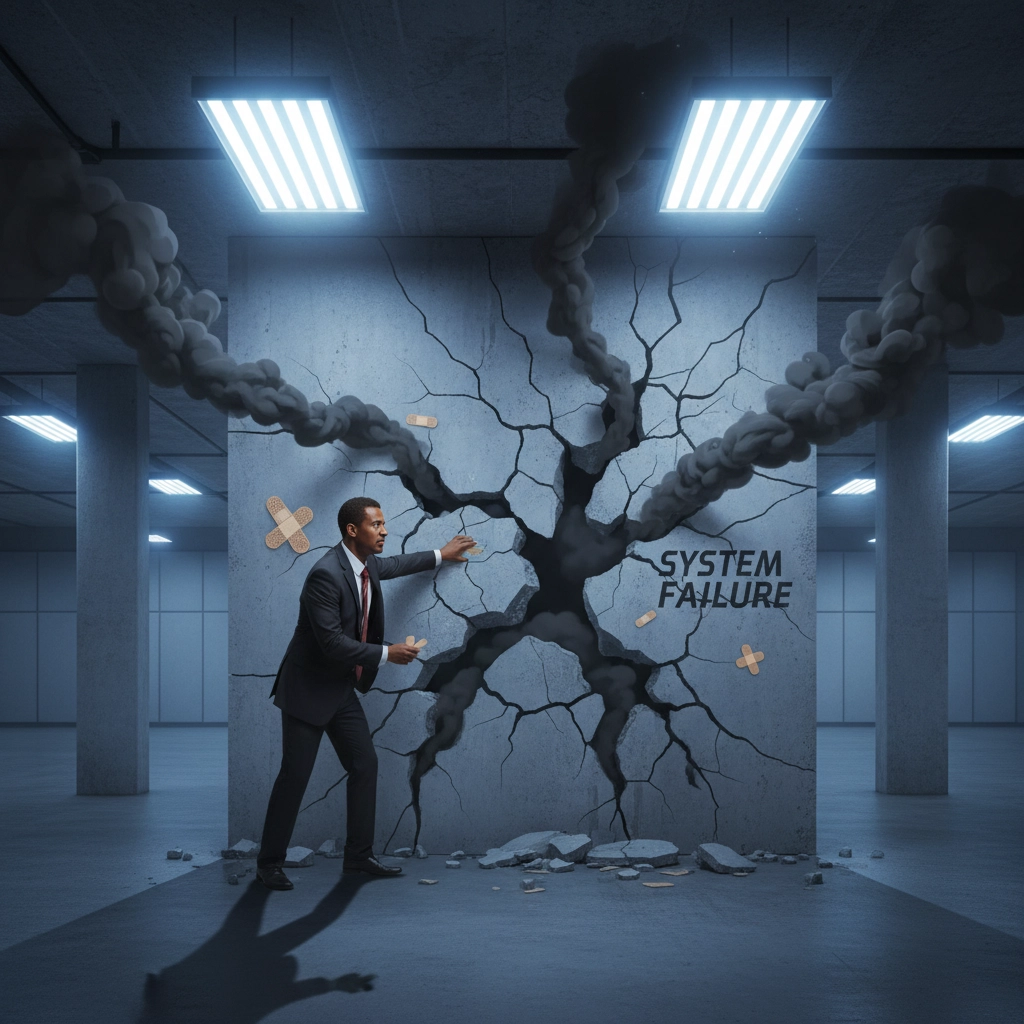
Here's where traditional resilience training goes wrong: It treats burnout like it's a personal failing rather than a systemic breakdown.
Most resilience programs follow the same tired playbook:
- "Practice mindfulness during your lunch break"
- "Set boundaries" (without addressing the culture that punishes boundary-setting)
- "Think positive thoughts"
- "Build your stress tolerance"
It's like teaching someone to swim while they're drowning in quicksand. You're asking individuals to fix problems that are fundamentally organizational.
The brutal truth? Resilience training cannot single-handedly combat the detrimental effects of a toxic work culture. When 35% of workers cite crushing workloads and 58% point to impossible hours as their primary burnout drivers, telling them to "breathe deeply" isn't just inadequate, it's insulting.
The Real Culprits Behind the Burnout Epidemic
Let's call out what's actually killing people's souls at work:
Workloads That Would Make Atlas Weep
We're asking humans to carry impossible loads. Tight deadlines, excessive demands, and the expectation to be "always on" create a constant state of fight-or-flight. Your nervous system isn't designed to handle this level of chronic activation.
The Illusion of Control
Nothing burns people out faster than feeling powerless. When every decision has to go through seventeen approval layers and micromanagement is the norm, people lose their sense of agency. And humans without agency? They wither.
Work-Life Integration Gone Wrong
Remember work-life balance? Yeah, that died somewhere between Slack notifications at 11 PM and "quick" weekend calls. The boundaries have dissolved, and people are drowning in an endless sea of professional obligations.
Recognition Bankruptcy
Here's a radical thought: People need to feel like their work matters. When contributions go unnoticed and toxic behaviors get rewarded, you create an environment where burnout thrives.
What High Performers Really Need (Hint: It's Not Another Breathing Exercise)
If you're a founder, executive, or high-achiever reading this, you already know that traditional wellness approaches feel hollow. You need something that acknowledges both the intensity of your world and the deeper human needs that drive sustainable performance.
This is where most professional development gets it wrong. It either goes full corporate-speak (soulless systems and processes) or full woo-woo (spiritual bypassing that ignores practical realities). What's missing is an approach that honors both your drive for excellence AND your need for authentic human connection.

The Axis Becoming Difference: Structure Meets Soul
Here's what we've learned working with hundreds of high-performing professionals: Real transformation happens when you combine three elements that traditional programs miss:
1. Structural Intelligence
Yes, you need systems. But not generic productivity hacks: customized frameworks that work with your specific neurology, work style, and life circumstances. We help you build sustainable rhythms that honor your ambition without burning you out.
2. Authentic Self-Leadership
Most leadership training teaches you to perform leadership rather than embody it. We dig deeper: helping you understand your core patterns, triggers, and authentic leadership style. When you're leading from your true center, work becomes energizing rather than depleting.
3. Ancestral Wisdom Integration
This is the piece that most business coaching completely misses. Your nervous system carries patterns passed down through generations. Your relationship to work, success, and rest isn't just personal: it's ancestral. We help you identify and transform inherited patterns that may be driving your burnout.
Why This Matters for Your Bottom Line (And Your Life)
Here's the thing about burnout: It doesn't just impact the burned-out person. It spreads through teams like wildfire. When your top performers are running on fumes, decision-making suffers, creativity plummets, and that innovative edge you've built your company on starts to dull.
The organizations that will thrive in the coming years aren't the ones that extract the most from their people: they're the ones that create conditions where people can sustainably perform at their best. That requires a fundamentally different approach to human development.

The Real Work Begins Now
If you've made it this far, you're probably recognizing yourself in this picture. Maybe you're the executive who's been pushing through exhaustion for months. Maybe you're the founder who built a company but lost yourself in the process. Maybe you're the high-performer who's wondering if this level of intensity is actually sustainable.
The good news? Burnout isn't a life sentence. But recovery requires more than surface-level fixes. It requires a willingness to examine the deeper patterns: personal, professional, and ancestral: that got you here.
Real resilience isn't about building higher tolerance for toxic conditions. It's about creating conditions where your natural vitality can flourish. It's about aligning your external success with your internal well-being. And it's about remembering that you're not a productivity machine: you're a human being with needs, limits, and a right to thrive.
The 52% of professionals experiencing burnout (and the even larger percentage at risk) aren't weak. They're canaries in the coal mine, signaling that our entire approach to work needs a fundamental redesign.
The question is: Are you ready to be part of that redesign? Or are you going to keep trying to resilience-train your way out of a system that's fundamentally broken?
Because here's the truth that no one wants to say out loud: The problem isn't that you're not resilient enough. The problem is that we've created workplaces that would break anyone.
It's time for a different conversation. One that honors both your ambition and your humanity. One that recognizes that sustainable high performance requires tending to the whole person: mind, body, and soul.
That conversation starts now.

