


The coaching world is experiencing a quiet revolution. While everyone's debating whether AI will replace human coaches, smart leaders are already doing something different: they're using both. Instead of picking sides, they're creating a powerful partnership between algorithms and human wisdom that's transforming how leadership development actually works.
This isn't about choosing between a robot or a person. It's about understanding what each brings to the table and orchestrating them together in ways that unlock potential neither could achieve alone.
What AI Actually Gets Right in Coaching
Let's start with what AI coaching does exceptionally well. The technology has evolved beyond simple chatbots into sophisticated systems that can analyze patterns, provide personalized guidance, and deliver insights at scale.
Immediate, Data-Driven Insights
AI coaches can tap into vast datasets: some systems analyze over 1.5 billion data points from years of research: to spot behavioral patterns and connect personality traits to specific outcomes. When you're dealing with a challenging team dynamic or preparing for a difficult conversation, AI can instantly provide structured recommendations based on proven frameworks like SBI (Situation, Behavior, Impact) or the 4 As (Awareness, Acknowledgment, Action, Accountability).
Always-On Availability
Unlike human coaches who require scheduling, AI coaching is there at 2 AM when you're preparing for tomorrow's board presentation or Sunday evening when you're reflecting on last week's leadership challenges. This constant accessibility means development happens in real-time, not just during scheduled sessions.

Personalized Guidance at Scale
Perhaps most importantly, AI democratizes access to coaching insights that were historically reserved for executives. Middle managers and individual contributors can now receive personalized development guidance without the cost constraints of one-on-one human coaching.
The technology excels at synthesizing feedback, tracking progress against goals, and sending automated accountability reminders that keep development momentum going between formal coaching sessions.
Where Human Wisdom Remains Irreplaceable
But here's where things get interesting: and where the limits of AI become crystal clear. Despite impressive technological capabilities, certain dimensions of leadership development remain firmly in the human domain.
Emotional Intelligence and Genuine Empathy
While an algorithm might flag stress management as a concern based on behavioral data, a human coach provides the emotional support, encouragement, and genuine understanding that actually helps leaders work through underlying issues. AI can identify patterns, but it can't sit with you in the discomfort of a difficult realization or celebrate your breakthrough moments with authentic joy.
Contextual Wisdom and Organizational Politics
Human coaches navigate complex interpersonal dynamics, understand unique organizational cultures, and appreciate individual motivations in ways that transcend data patterns. When you're facing ethical dilemmas or emotionally charged situations, human coaches excel at asking the right questions and helping you make decisions aligned with your values, not just your metrics.

Strategic Career Guidance
AI can show how your personality traits align with certain roles, but human coaches offer perspective on long-term aspirations, industry trends, and personal fulfillment that goes beyond statistical correlation. They help you see the bigger picture of where your leadership journey is heading.
The Hybrid Model in Practice
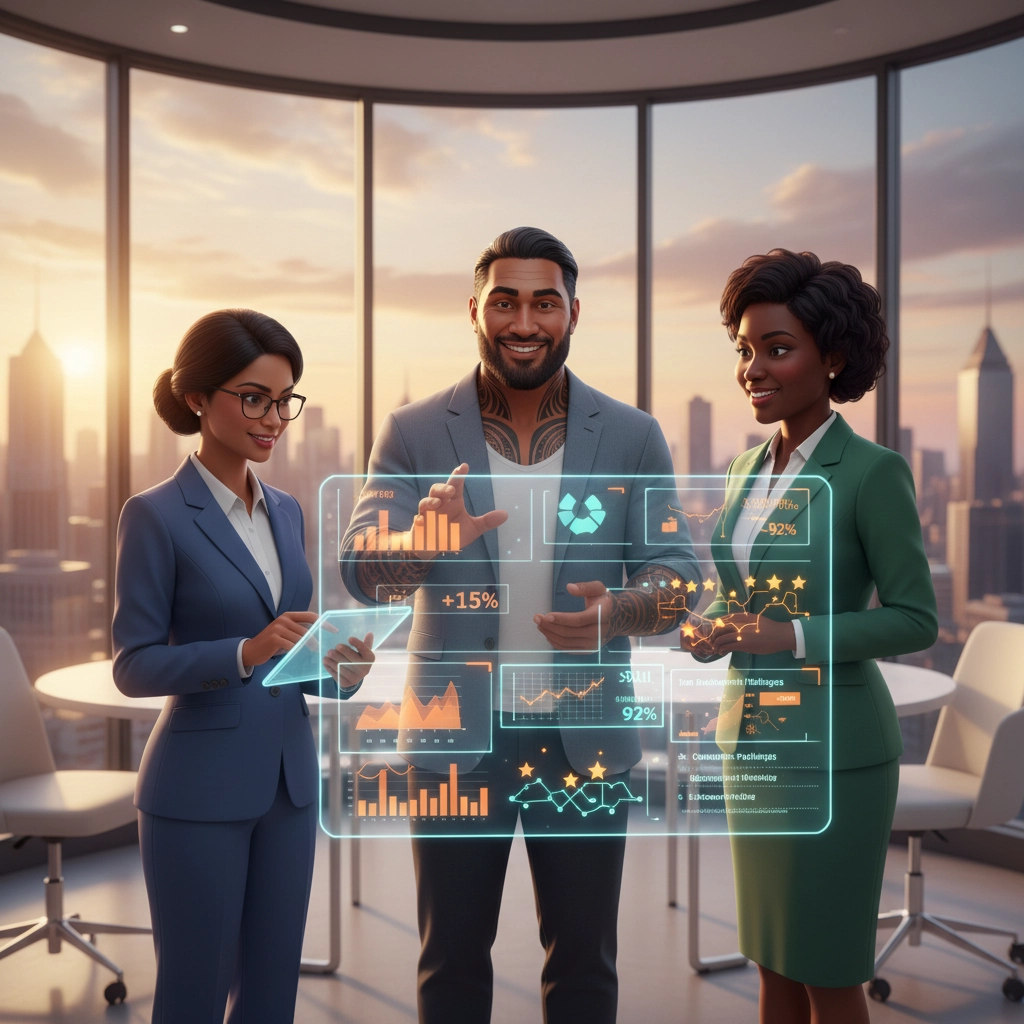
The most effective approach combines these strengths strategically: AI handles pattern recognition and routine feedback while human coaches focus on nuanced areas like ethical challenges, emotional obstacles, and strategic planning.
Here's how it works in practice:
AI as the Foundation
AI generates detailed personality profiles, identifies behavioral patterns, and provides structured insights based on your leadership data. This creates a rich foundation of self-awareness and targeted recommendations.
Human Coaches as Interpreters
Rather than starting from scratch trying to understand your leadership style, human coaches enter conversations armed with AI-generated context. This allows them to skip basic assessments and dive directly into deeper challenges: the obstacles, aspirations, and complex situations where human wisdom makes the difference.
Continuous Partnership
The best implementations create a continuous loop: AI provides ongoing insights and accountability between human coaching sessions, while human coaches help interpret and apply AI recommendations in ways that feel personally relevant and practically actionable.

Real Benefits Organizations Are Seeing
Companies implementing this hybrid approach are experiencing tangible advantages that go beyond theoretical benefits.
Cost-Effective Scale
AI handles the heavy lifting of data analysis and initial coaching guidance, allowing human coaches to focus on higher-value interactions. This means organizations can expand coaching access to broader populations without proportionally increasing costs.
Accelerated Development Cycles
Leaders get immediate AI guidance for routine questions and challenges, supplemented by deeper human coaching for transformational work. The result is faster, more consistent progress on development goals.
Enhanced Confidence and Clarity
By organizing thoughts with AI coaching and receiving structured recommendations, managers feel more equipped to make decisions and take action. When they're ready for deeper work, human coaches build on this foundation rather than starting from zero.
The Critical Caveat
There's an important warning that comes with this integration: AI has a tendency toward over-prescription. An AI system might provide 20 suggested actions when what you actually need is clarity on the one most important next step.
The best human coaches ask penetrating questions that help leaders cut through complexity rather than adding more options. In hybrid models, human coaches serve as crucial filters, helping leaders focus their energy rather than diluting it across too many AI-generated recommendations.
What This Means for Your Leadership Development
If you're leading a team or organization, this hybrid approach offers a practical pathway forward. You don't need to choose between embracing AI or sticking with traditional coaching methods.
Start by identifying where AI can handle routine development needs: personality assessments, feedback synthesis, accountability tracking, and pattern recognition. Use these insights to inform deeper conversations with human coaches who can help you navigate complex interpersonal challenges, ethical decisions, and strategic career moves.
The leaders who thrive in the coming years won't be those who resist technology or those who fully automate their development. They'll be the ones who strategically blend algorithmic insights with human wisdom to create development experiences that are simultaneously data-informed, emotionally intelligent, and deeply personal.
The future of leadership development isn't about replacing human coaches with AI or rejecting technology in favor of tradition. It's about orchestrating both to unlock potential that neither can achieve alone. The revolution isn't coming; it's already here, and the smartest leaders are already using it.

